Posts

Showing posts with the label South Auckland

Understanding historic Māori fluidity within Ngāti Te Ata Waiōhua

Image
What does the term ‘Tāmaki Makaurau’ mean? Some would argue that it means ‘Tāmaki of a hundred lovers’, while others would claim it means ‘Tāmaki desired by many’ or ‘Tāmaki the bride sought by a hundred’(1). No matter which meaning you prefer, they all clearly suggest that Tāmaki has long been a place sought after by many rōpū (groups). Over the course of its more recent history, Tāmaki has become the seat of multiculturalism in these motu. At different points roughly over the last two centuries Pākehā, diverse Asian peoples, tangata o te Moana Nui a Kiwa and diasporic Māori have come to call Tāmaki home.  Centuries before this multi-ethnic rōpū found residence in Tāmaki, several ancestral tangata whenua groups sought sustenance and security here. These rōpū recognised the special position of Tāmaki, situated on a fertile volcanic field and lined with awa allowing for easy access to multiple moana. Over time through exercising their mana, these groups would become the mana whenua ...

Pukekiwiriki Pā Historic Reserve

Image
During the Auckland Heritage Festival 2020 we've been sharing hidden histories of Auckland places written by Auckland Council Heritage Unit staff. Myfanwy Eaves is a Senior Specialist Archaeology and has been working with mana whenua and the Papakura Local Board on a project to improve access to Pukekiwiriki Pā. Image: Myfanwy Eaves. View from east to Pukekiwiriki Pā, September 2020. Pukekiwiriki Pā has recently seen some improvements in access and these are open to all from September 2020. Mana whenua have strong cultural, traditional, and historic links with Pukekiwiriki Pā, its associated harbour, wetlands and inland waterways, including rivers, streams and springs. There is a long occupation history for Māori in Tāmaki Makaurau where cultural heritage sites were the places and settlements of ancestors. Pukekiwiriki Pā is one such significant site. The pā is a taonga that is significant and closely linked to the identities of the mana whenua. Pukekiwiriki Pā is co‐governed with ...

Hats off for the ostrich feather! A transcription tale

Image
Transcription tales – long and short. While we are working from home the Heritage Collections team are transcribing many of the nineteenth century letters in the collections. This makes them much more accessible for keyword searching. Transcription is also a great way for the team to learn more about the collections. We hope to share some of our discoveries while the library is closed due to the extraordinary Level 4 response to the global pandemic, COVID19. Today’s topic is the ostrich industry, inspired by a letter to Sir George Grey from Hollings William Ogilvie, 18 September 1881. Image: Ostrich farm, Whitford, about 1900. Auckland Libraries Heritage Collections, Footprints 00883 . The ostrich industry was a thriving international trade in the nineteenth century when hats required feathers. Ostrich feathers featured on the fashionable millinery (hat making) for the well-dressed gentlewoman as well as the proper dress uniform for the military. This fashion started in the Fr...

Stepping back into the shed: Westfield Freezing Works, 1916-1989

Image
"Westfield workers turned a place which was often physically strenuous, monotonous, hot, cold, bloody and smelly work, into a workplace of whānau, camaraderie and whanaungatanga." - Ross Webb, “Your Livelihood is on the Line” Freezing workers in Aotearoa New Zealand, 1973-1994. University of Auckland, 2015. For many workers in the meatworks industry one of the main things they enjoyed is the sense of working as part of a large family. This was very much the case at the four large meatworks in the Westfield area of Auckland, R. & W. Hellaby, AFFCO (Southdown), Auckland City Abattoirs and Westfield Freezing Company. Eunice Te Rangiuaia refers to this in her interview about her time working in the cannery at Westfield Freezing Company. Eunice Te Rangiuaia – Games and the cannery Listen to the track here The ‘Stepping back into the shed’ exhibition was held between October and November 2019 at Māngere Arts Centre - Ngā Tohu o Uenuku . It celebrated the people, p...

Acknowledging Armistice Day

Image
On 11 November 1918, an armistice was signed between the Allies and Germany, and the guns fell silent on the Western Front. Armistice Day has been commemorated in New Zealand ever since, not only to celebrate peace but also to acknowledge the sacrifices of those who made peace possible. The depth of this sacrifice is exemplified by the experience of one small town, Manurewa. At the outbreak of the First World War, there were about 500 people living in the area. Few if any of them were to remain unaffected by the war. The photograph below was proudly taken on the opening day of Manurewa School, 3 September 1906. Little could it be imagined at the time that in less than a decade the ranks of the children assembled here would be significantly thinned by bullets, bayonets, sickness and bombs. Future soldiers, Manurewa, 1906. Auckland Libraries Heritage Collections, Footprints 05367. Photograph reproduced courtesy of Manurewa Historical Society. Seven of the older boys in the bac...

An influenza memorial in Manurewa

Image
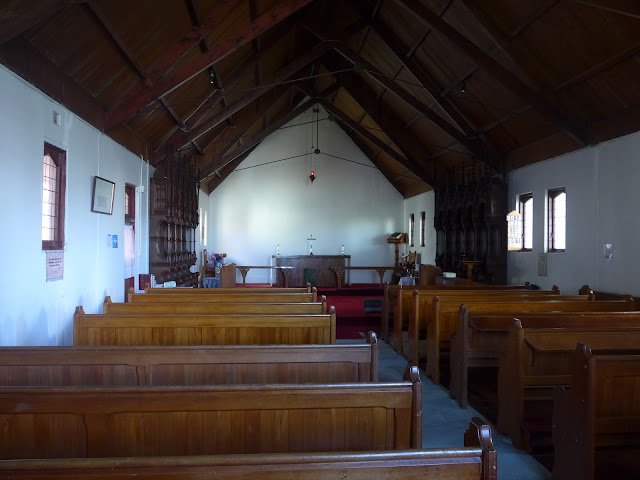
In old St Luke’s Anglican Church, Manurewa, is a poignant reminder of New Zealand’s 1918 influenza epidemic. Tucked away in one corner of the chancel is a carved and polished rimu lectern. This has a tiny brass plaque affixed which reads: To the Glory of God And in memory of Dorice Whittingham Sometime Organist of this Church Who died for the sake of Others. Bruce Ringer. Interior old St Luke’s, Manurewa . 2018.  Dorice (usually known as ‘Doris’) died on 8 December 1918 of influenza contracted while nursing patients at Papakura hospital. She had been married to local quarryman and ex-serviceman Alexander Whittingham for little more than a year. A death notice was published in the NZ Herald the following day. A brief tribute was also published in a local newspaper: “When the epidemic was rampant at Papakura both Mrs Whittingham and her mother volunteered assistance. The former had the advantage of having had considerable nursing experience at Te Aroha, and theref...

The hundred-year-old Papatoetoe Town Hall (part 2)

Image
On 27 February 2018 Papatoetoe will celebrate the centenary of one of its most iconic buildings, the Papatoetoe Town Hall. A centenary dinner will be held in the hall and stories and photographs from residents and community groups who have used the building over the years will be on display (contact jennya.clark@xtra.co.nz for details). This is the second part of a history of the hall. Read about the early years in The hundred-year-old Papatoetoe Town Hall (part 1) . Papatoetoe Civic War Memorial The section where the library stood was an obvious site for development, and Papatoetoe Borough Council decided to develop a war memorial building there. The makeshift library building was thus removed and, during an impressive open-air ceremony held on 8 October 1955, the Papatoetoe Civic War Memorial was opened in its place. This was a dignified two-storey building housing a new and much expanded public library downstairs, and a meeting room or ‘concert chamber’ and new Borough Council ...

The hundred-year-old Papatoetoe Town Hall (part 1)

Image
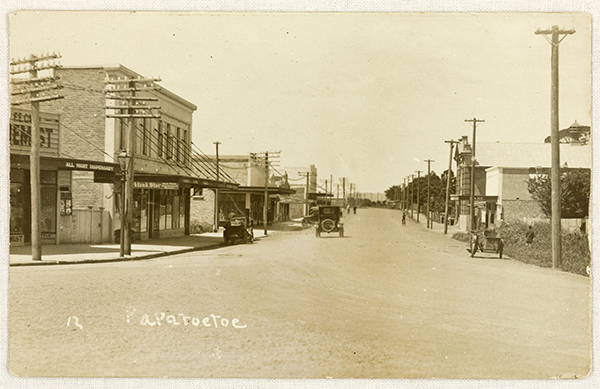
On 27 February 2018 Papatoetoe will celebrate the centenary of one of its most iconic buildings, the Papatoetoe Town Hall. A centenary dinner will be held in the hall and stories and photographs from residents and community groups who have used the building over the years will be on display (contact jennya.clark@xtra.co.nz for details). This is the first part of a history of the hall we will be publishing before the centenary celebrations. In 1916, when plans for the hall were formed, Papatoetoe was a growing and prosperous suburban community offering both the advantages of country living and a ready link to Auckland by the railway line. Its population had more than doubled from 386 to 785 people over the previous three years. Its leading residents decided it was time the town had the facilities to match its size, including a public hall. View of Station Road East, Papatoetoe, ca 1925. The Papatoetoe Town Hall can be seen towards the middle right. Auckland Libraries Heritage Coll...