Posts

Showing posts with the label horses

Auckland Cup and racing at Ellerslie

Image
To celebrate Auckland Cup day at Ellerslie today,  we've  had look through various Heritage and Research collections held at Auckland Libraries to find out some the history around the Auckland Racing Club , the Auckland Cup and Ellerslie racecourse. Ellerslie Horses have raced at Ellerslie since 1857 when Robert Graham hosted a race meeting on his property, on the site which is now Ellerslie Racecourse. The Auckland Racing club then purchased thirty-six hectares of land from Graham in 1872 on which the course is situated. Ref: GB Scott Publications Limited, Ellerslie Racecourse, Auckland, New Zealand, 1970s, Sir George Grey Special Collections, Auckland Libraries, 996-1505.
Victor Albert Kelsall

Image
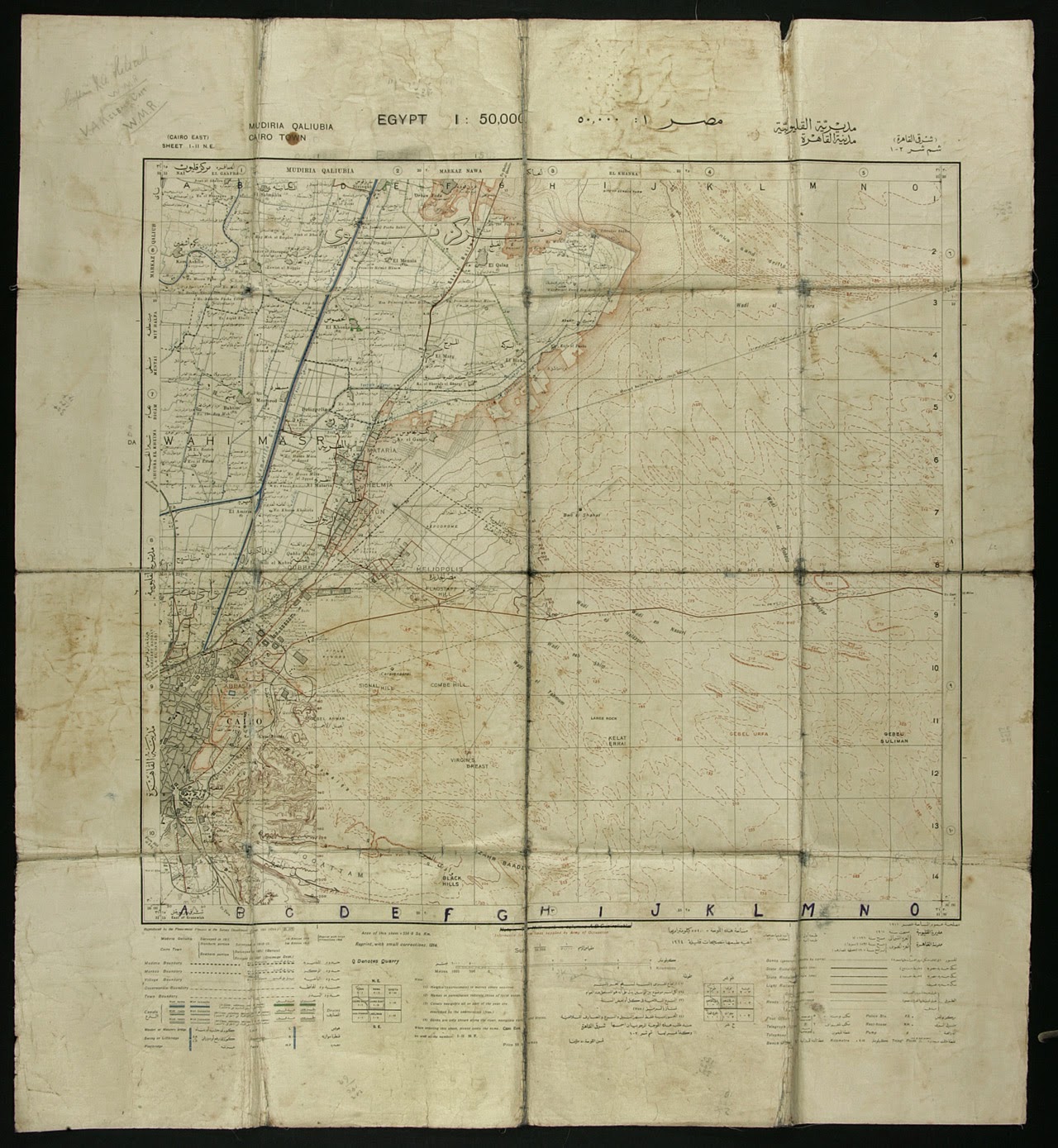
While selecting material for the exhibition ' It’ll be over by Christmas: World War 1914-1918 ', I came across a map showing  Zeitoun Camp  on the outskirts of Cairo in Egypt. This is where the New Zealand soldiers trained before being shipped off to various locations on the fronts to fight. Ref: NZ Map 8064, Sir George Grey Special Collections, Auckland Libraries

Horses in the First World War

Image
Animals played a vital part during the First World. None more so that the horse. The conflict began with the cavalry forces but as the war progressed, horses were gradually replaced by the introduction of tanks. However, horses still played a vital part in the war. The use of horses varied but the United Kingdom used mounted infantry and cavalry charges throughout the war. Shipping conditions for horses were not ideal and many arrived in poor condition. There was also no return journey for the remaining horses at the end of the war. Some were given to the British Army but the majority were sadly destroyed. One or two did make the journey home including Colonel C. G. Powles’ horse Bess and there is a memorial to her near Flock House in Manawatū. Ref: Auckland Weekly News, the NZ Expeditionary Force who are now serving in Egypt, no location, 1914, Sir George Grey Special Collections, AWNS-19141210-47-1 Horses were used for a variety of jobs, moving heavy artillery, transportation...

Saddled Up: A History of Horses

Image
The horse has had a long history in NZ and were first introduced to NZ in the 19th century. European settlers relied heavily on horses to transport everything, not quite the kitchen sink but almost! Horses were essential for farming and were the main form of transport in both rural and city areas for European settlers and Māori. The first iwi to have a horse was Ngā Puhi. They were given a mare, which was one of the first horses introduced into NZ. Horses were later traded with other iwi and used in the New Zealand Wars during the 1860s. Whilst not native to NZ, the horse has adapted well to the environment. By the 1870s, there were feral herds in the central plateau in the North Island, which came to be referred to as the Kaimanawa horses.These 'wild' horses are associated with the Ngāti Tūwharetoa people, particularly the Ngāti Tama Whiti hapū. Horses have remained popular and many people take still take part in horse riding and attend racing activities. Keen to find ...

Heady Heights and Haystacks

Image
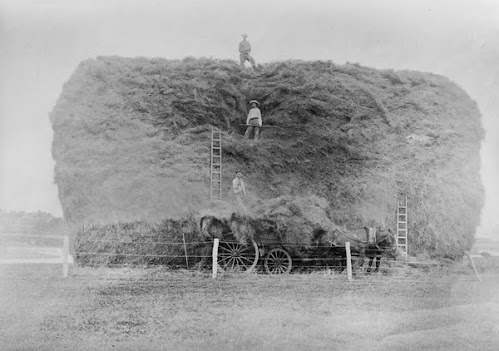
Driving in the outskirts of Auckland at this time of year you are bound to notice those large rolls of hay perched on hillsides, or perhaps the smaller oblong bales dispatched along the length of a recently chopped field. In the past the making of haystacks was an activity which provided a way of connecting the local farming communities and local families with one another. Before the advent of hay-balers these giant piles of hay required far more labour, tenacity and skill to create. Ref. Footprints 20, Giant hay stack, Mangere, c. 1905, photograph reproduced by courtesy of Mangere Historical Society, South Auckland Research Centre The stack in the photograph above was made up of hay from fields 10 acres in extent and was estimated at 60 tons in weight. Reg Wyman is on top of the stack and Geoff Mellsop on the ledge halfway down. Ref. Footprints 01307, Haystack at Flat Bush, 1956, photograph reproduced by courtesy of Mangere Historical Society, South Auckland Research C...