Posts

Showing posts matching the search for dalmatians

Dalmatians out west: early Dalmatian settlers
Image
Now on in the J.T. Diamond Room, Waitakere Central Library is our Dalmatians out west exhibition. The exhibition features images from Auckland’s Dalmatian community and will run until 30 August 2016. This is the first in a series of blog posts based on the themes in the exhibition. Early Dalmatian settlers of West Auckland The first Yugoslavs to settle in New Zealand are thought to be sailors from the Frigate Novara which berthed in Auckland in 1858. There was then a small influx of Dalmatian migrants, mainly from Podgora, in the mid to late 1870s with many working in the gumfields around Dargaville, Ahipara and Riverhead. In 1903 the first vineyard in Oratia was established by Ivan and Katherine Vella, the first Dalmatians to arrive in the district, and by 1913 they had six acres of grapes. They also grew apples and peaches on the land. In 1904 Tony Borich, Mate Borich, Jack Sunde and Stanko and Lovre Marinovich bought 160 acres of land in Oratia. Ref:  Lov...

Dalmatians out west: transport, horticulture, viticulture and sport

Image
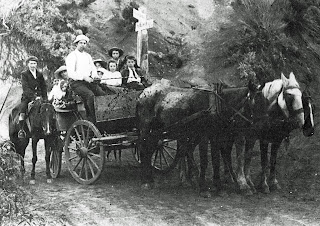
Now on in the J.T. Diamond Room, Waitakere Central Library is our  Dalmatians out west   exhibition. The exhibition features images from Auckland’s Dalmatian community and will run until 30 August 2016. This is the third and final blog post based on the themes in the exhibition. Transport, Horticulture and Viticulture A number of Dalmatian families specialised in transport or earthmoving companies. The Lendich family were by far the largest, followed by Vuksich & Borich and then Bogoslav Sokolich.  Marinovich and Sons also owned a fleet of transport trucks which plied the route between Dargaville and Auckland. Ref:  Marinovich & Sons’ truck for the Auckland-Dargaville Service. West Auckland Research Centre, Auckland Libraries. DGHS Collection. Ref:  Tony and Ivan Yukich standing in front of their new truck, c1998, West Auckland Research Centre, Auckland Libraries. DGHS Collection.

Dalmatians out west: music, dance, social occasions and weddings

Image
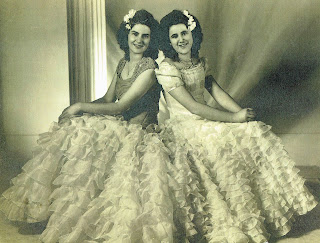
Now on in the J.T. Diamond Room, Waitakere Central Library is our Dalmatians out west exhibition. The exhibition features images from Auckland’s Dalmatian community and will run until 30 August 2016. This is the second in a series of blog posts based on the themes in the exhibition. Music, dance, social occasions and weddings Music and dance were mostly the domain of the two Yugoslav organisations , the Yugoslav Club Inc., and the Yugoslav Benevolent Society (The Croatian Benevolent Society).  Annual Ballroom competitions were conducted and cups were given out to the best foxtrot, waltz and tango dancers.  Ref:  Sisters Danica and Fleur Martinovich dressed for the ball in dresses they made themselves, 1946.  West Auckland Research Centre, Auckland Libraries. DGHS Collection.

Unstable Ground: Migrant Producers, Selling, and Discrimination in Auckland 1890-1920s

Image
Beginning a narrative part way through makes for a confusing story. Yet, recollections of Auckland's horticultural histories often do exactly that. Prioritising the quaint Victorian garden and divorcing horticultural practice from other intersecting histories of war, of survival, and of immigration, has made for an incomplete retelling. This series of articles seeks to depart from that tradition, exploring the deep interconnection between the social histories of Asian and Eastern European migrants in Aotearoa, and their contributions to the horticultural sector. Tāmaki Makaurau was central to this history as so many of these migrants settled on its fertile land. To help readers understand the following articles, this first one will provide a condensed historical background. It will also explain the scope of this project and comment on the key theme of continuity and change. Image: " Martin's Farm at Auckland & Gt. South Road New Zealand." circa 1863. Auckland Mus...

Eating in & dining out: Dalmatian-run grill rooms of the 1940s

Image
The 1940s were boom times for Auckland’s Dalmatian-run grill room restaurants, especially after US soldiers, sailors and nurses arrived in June 1942 - there were six grill rooms on Victoria Street West alone (Clarich, Jelich, Kosovitch, Lipanovich, Makovina and Urlich) and a further 20 in the central city. The Americans came for R and R after fighting in the Pacific, for medical attention, and for training. For the next two years about 50,000 American servicemen and women were in the country at any one time. They were often paid twice as much as local wages, and had three out of every four days free. Ref: Auckland Weekly News, US troops in Queen Street, 1942, Sir George Grey Special Collections, Auckland Libraries, 7-A14390.