Posts

Showing posts matching the search for samoa

Samoa Guardian

Image
To mark Samoan Language week, we are featuring a great Samoan resource in our heritage collections whose existence was alerted to me by a sleuth-like colleague. We have a carbon copy typescript of the Samoa guardian from 26 May 1927 to 6 June 1929. Though this transcript finishes in June it provides a particularly valuable historical record of the two years leading up to the disastrous events of Black Saturday .  Image: Reinforcement for the Administration Police At Samoa ; The Departure From Auckland Last Saturday Morning.  Auckland Libraries Heritage Collections AWNS-19280426-38-03 The Samoa guardian came into Auckland Libraries collection through a donation from the estate of the Rev. Albert Bygrave Chappell on 25 January 1951 along with some of his other papers which are now part of our Manuscripts collection. The mystery in the provenance is how this ended up in the possession of Rev. Chappell in the first place and why did he have a carbon copy ...

Celebrating Samoa

Image
Today marks the start of the Pasifika festival. 'My pride, my treasure, my Samoa / O lo'u mitamitaga, o a'u measina, o lau Samoa' is the title of the new  collection of Samoan photos on Historypin . This collection covers both Samoa and American Samoa and was created from the heritage collections at Auckland Libraries. The images are mainly from the late 19th and early 20th century with a selection from the late 1980s and 1990s giving a more contemporary focus. Ref: AWNS-18980909-2-1, bush scene in Apia, 1898, Sir George Grey Special Collectio These photos capture the timeless essence of what is most important to Samoa; her land and her people and are a good way to mark the start of the Pasifika Festival. They bring together key places and events in Samoa and NZ - from the sliding rocks of Papasea, to the procession of Malietoa’s men on Coronation Day in the late 1800s, to the Bairds Intermediate Samoan group performance at the Otara Festival. To access the ...

More Tales from the South Pacific: New Zealand’s capture of German Samoa

Image
Soon after the start of the First World War, New Zealand’s Governor Lord Liverpool agreed to send New Zealand troops to capture the German wireless station in Samoa and occupy the German colony . New Zealand troops, supported by three New Zealand cruisers and three other Australian and French warships, took possession of German Samoa on 29th August 1914. Ref: Auckland Weekly News, The British occupation of Samoa, 29 August 1914, Sir George Grey Special Collections, Auckland Libraries, AWNS-19140917-42-1. Ref: Auckland Weekly News, The unopposed landing of the New Zealanders in Samoa, 7 September 1914, Sir George Grey Special Collections, Auckland Libraries, AWNS-19140917-43-1.

Vaiaso o le Gagana Sāmoa: Samoan birth, death and marriage collections at Central Library

Sāmoan Language Week is an opportunity to acknowledge and support the Sāmoan language and its use in New Zealand. We celebrate the languages and cultures of our diverse nation, to connect people back to their roots but also to teach other people about a different culture. In Research Central, on Level 2 in Central City Library we are proud of the diversity of our international family history collection. Our Pacific Island collection is big part of this - and the Samoan collection is very strong. People use our family history collections to trace their family, but also to reconnect with their culture and their heritage. If you search our catalogue by typing: 3 SAM BDM in the search box for example you will find a whole host of resources on microfilm for births, deaths and marriages in Samoa: Birth registers for Savai'i, Western Samoa, 1905-1993 Death registers for Savai'i, Western Samoa, 1923-1992 Death registers for Upolu, Western Samoa, 1923-1993 Delayed registrations...

Pacific newspapers in Auckland

Image
In recent years, a number of Auckland-based newspapers have sprung up to cater for local Pacific Island communities. The majority of these publications have been produced for the Samoan community.   The first such title was Samoana , a Samoan-language weekly tabloid which was established in Mangere in 1979. This initially offered mostly Samoan news, but over the years included an increasing amount of news about the New Zealand-based Samoaon community. It ceased publication in 2006. In 1997 the rival Otahuhu-based Weekly Samoa Post also began publication. This lasted until 2005, being succeeded by Le Samoa Post until 2007. Like Samoana , the Post included mostly Samoan language material.   Ref: Banner for Samoana newspaper, South Auckland Research Centre

A heritage celebration of Samoan Language Week

Image
Ref: AWNS19120725-15-1, a river scene in the island of Savaii, 1912, Sir George Grey Special Collections Talofa lava, Samoan Language Week is being celebrated each year to acknowledge Samoan Independence Day. It is a time to recognise, support and help maintain the Samoan language and its use in New Zealand.   Ref: AWNS-18980909-2-1, Apia, 1898, Sir George Grey Special Collections

Pacific Islanders in the First World War

Image
Updated 18 November 2016 On 23 April earlier this year members of the local Niuean community unveiled a unique war memorial in Mt Roskill’s War Memorial Park. This was the Niue Island World War I Roll of Honour : a polished black granite tablet listing the names of men from Niue Island who served in the New Zealand armed forces during the First World War: 150 men who served in the 3rd Māori Contingent and seven who served in other sections of the NZEF. Why did so many men from a tiny and remote Pacific island volunteer to serve in a war which overtly had little to do with them? Well, New Zealand had annexed both the Cook Islands and Niue in 1901. After war broke out in 1914, many local men from both protectorates were eager to enlist, some of them motivated by patriotism, most of them impelled by a sense of adventure, and the colonial administrators on the spot were keen to facilitate their recruitment. The New Zealand military authorities back home initially welcomed only volun...

Views of the Pacific

Image
Pasifika at Auckland Libraries is well underway and there is lots you can take part in . To get you in the mood, listen to the Pacific Islands music playlist  that has been specially created for this festival. You can also check out the  Pacific resources  at Auckland Libraries. This includes a range of heritage collections: online resources, Pacific Island family history resources (Central Auckland Research Centre), Pacific newspapers (South Auckland Research Centre) and reference materials at the research centres . There are also significant collections in the Sir George Grey Special Collections, including a tapa cloth book collected during Cooks' three voyages to the southern hemisphere. This has now been digitised and can be accessed online and you can read about the project to track down the other Cook tapa cloth books known to exist. To further celebrate and honour the contribution that Pacific Islands communities make to the cultural mix of peoples...

Niuean language Bibles

Image
This week is E Faahi Tapu he Vagahau Niue 2015 , Niuean Language Week for 2015. As a result of Sir George Grey’s collecting of Pacific Islands language materials , Auckland Libraries has a collection of Niuean language Bibles. Today we’re going to look at three of our earliest publications in the Niuean language. The following descriptions are taken from the Historical catalogue of the printed editions of holy scripture in the library of theBritish and Foreign Bible Society compiled by T.H. Darlow and H.F. Moule. In the introduction to the catalogue T.H. Darlow writes that The British and Foreign Bible Society specifically exists to promote missionary versions of the scriptures. St Mark’s Gospel, published in 1861. Ref: Ko e evagelia ne tohi e Mareko, p.1, 1861, Sir George Grey Special Collections, Auckland Libraries, 226.3 KOEE.

"Fairness to all"

Image
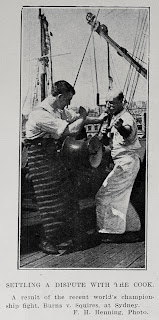
We all love a stirring milestone, and this one is up there with the best of them. The 30th September marked fifty years since New Zealand set up its own office of the Ombudsman – the first country outside of Scandinavia to do so. Loosely translated, the word Ombudsman  means “grievance person”. That's just what they are - the “go to” people if you’ve got a gripe with your school’s board of trustees, the EQC, IRD, the ACC or any government department.  Ref: A dispute amongst workers, AWNS-19080917-12-1, Sir George Grey Special Collections

Horses in the First World War

Image
Animals played a vital part during the First World. None more so that the horse. The conflict began with the cavalry forces but as the war progressed, horses were gradually replaced by the introduction of tanks. However, horses still played a vital part in the war. The use of horses varied but the United Kingdom used mounted infantry and cavalry charges throughout the war. Shipping conditions for horses were not ideal and many arrived in poor condition. There was also no return journey for the remaining horses at the end of the war. Some were given to the British Army but the majority were sadly destroyed. One or two did make the journey home including Colonel C. G. Powles’ horse Bess and there is a memorial to her near Flock House in Manawatū. Ref: Auckland Weekly News, the NZ Expeditionary Force who are now serving in Egypt, no location, 1914, Sir George Grey Special Collections, AWNS-19141210-47-1 Horses were used for a variety of jobs, moving heavy artillery, transportation...

The Tantalizing Language of the Arts

Image
Parallax , Vol. 1 No. 2, Summer 1983. Cover: Richard Killeen, 1982. Antic , Issue One, June 1986. Cover: Jenny Doležel.  Arts journals have been published in Aotearoa since 1928 - two began as humble newsletters that have grown into mainstays of today’s arts world ( Art News New Zealand and Art New Zealand ), but most lasted for just a few issues. A selection of these journals, drawn from the Angela Morton Room’s rich archival material, will be on display in Te Pātaka Toi | Art Library, Level 1, Takapuna Library, until 1 May. Whilst artists are central in the arts community, these journals form an important part of the network that nurtures and celebrates them. The editors of our first arts journal, Art in New Zealand , aimed “to set new standards and spur practitioners to sturdier effort to attain those standards” (Vol. 1 No. 1, 1928). “In this country, newspaper art notices are… more kindly than constructively critical. They spread praise lavishly, and dispraise is a rare...

Multicultural Oral History Project interviews

Image
Listen to the stories of New Zealand immigrants in their own words. The Multicultural Oral History Project, one of many collections held at Research West , has seven recordings of the voices of people from the Pacific Islands, Europe and Asia. They talk of their lives in their original countries, their experience of immigration and settling in New Zealand. Image: Photographer  unknown, children in traditional costume dancing at the Ons Dorp Dutch Retirement Village, McLeod Road, Henderson c. 1990, Auckland Libraries, West Auckland Research Centre Print Collection Helen Tamatoa Born in 1925, on Niue Island, Helen was one of 10 children (three sisters and six brothers). Educated in the London Missionary School in Mutalau and the Govt School in Kofekofe, she married the Rev. Tamatua Pahetogia. The family moved to New Zealand in 1982, living first in Grey Lynn and later in Avondale. Listen to Helen Tamatoa Sefuiva Siaumau Saumaleula Saifoloi Born in Samoa, 1935, Sefuiva has t...

Pasifika Churches in South Auckland

Image
The church forms an important part of the life of many Pasifika communities. Over recent decades the streetscapes in many parts of South Auckland have been enhanced by the addition of large new churches serving Pacific Island congregations. Some of these churches make striking architectural statements. For instance, in the Ormiston Road Tongan Methodist Church, architect George Moala used both traditional Tongan forms and traditional materials such as coconut fibre. Expert Tongan craftsmen were brought in to help with the work. The church was opened in June 1990. Ref: Footprints 03324, interior, Tongan Methodist Church, Otara, 1990, photograph reproduced by permission of Fairfax Media, South Auckland Research Centre Almost all of the mainstream and many of the smaller denominations are represented by thriving Pacific Island congregations. Some South Auckland churches hold their Sunday services in 3 or 4 different languages. Ref: Footprints 03313, New home for church, Otara,...

Thinking about WW1 centenary commemorations

Image
I can’t believe the speed at which 2013 is hurtling along, and that 2014 - and with it the centenary of the outbreak of WW1 – will soon be here. Not an anniversary to celebrate, of course, but a time to reflect on the suffering humanity is capable of inflicting upon itself. Ref: 35-R2163, Anzac parade, Sir George Grey Special Collections Over 100,000 New Zealanders took part in the conflict, and almost 20,000 lost their lives. Many New Zealand soldiers had their portraits taken before they left for Europe, and Herman Schmidt’s Studio in Auckland’s Queen Street was a favourite place to be photographed. 4,500 of Schmidt’s WW1 soldier portraits have survived and can be seen on the Auckland Libraries’ Heritage Images database . You can also see a virtual exhibition of the Herman Schmidt’s work

Art for the people

Image
Sculptures, murals and statues are dotted around Auckland with information about many of these public artworks available on Auckland Council’s Art and Heritage Database . A display on level 2 at the Central Library showcases some of these items, from Fatu Feu’u’s Aotea Centre mural to Greer Twiss’s Pigeon Park sculpture. Statues and monuments from the Auckland Domain are featured including the Pukekaroa Palisade where Princess Te Puea planted a tōtara tree during the city’s 1940 centennial celebrations in order to reaffirm the mana of the Tainui people in the area, and the connection between her family and the Domain. Her great-grandfather Te Wherowhero had lived in two houses on the Domain site between 1847-1858 before returning to the Waikato as the Māori King. Ref: Pukekaroa Palisade, 2016.

Tongan Language Week

Image
Malo e lelei. Tongan Language Week is being celebrated from 1-8 September. The theme this year is Fakakoloa 'o Aotearoa 'aki 'etau Lea mo e Hiva Faka-tonga / Enriching Aotearoa with Tongan Language and Music. As part of the celebrations, there is a vibrant  Facebook page . Auckland Libraries has a number of heritage resources relating to Tonga. This include the following subjects: heritage and identity, the Birth Marriages Death index for Fiji and Tonga from 1858-1873, traditional medical practices, early photography in Tonga and Samoa from 1855-1900, Tongan art, early Tonga as the explorers saw it 1616-1810 and the biography of the King of Tonga. Also held in the heritage collections are images showing Tonga, so step back in time and take a walk down memory lane ... Royalty:  Ref: AWNS-19000831-5-6, Mafu Prince of Tonga, 1900, Sir George Grey Special Collections

Myers Park

Image
In 1913 Arthur Myers , M.P., and former Mayor of Auckland gifted the city £9000 for the purchase of a gully in central Auckland with the intent to turn it into a park for the people of Auckland. Ref: Auckland Weekly News, The giver in his gift, 9 October 1913, Sir George Grey Special Collections, Auckland Libraries, AWNS-19131009-48-5.

Remembering Samoan ancestors

Image
Tālofa lava! Vaiaso o le Gagana Sāmoa – Samoan Language Week was celebrated at the end of May this year. Whilst the language week has come and gone, with so much fabulous heritage content at Auckland Libraries, it seemed a shame to wait until next year to share it with you. The main aims of this annual event are to celebrate and promote the Samoan language and culture and to encourage people to speak Samoan, which is one of the most commonly spoken languages in NZ. The theme this year was 'Taofi mau i au measina: Hold fast to your treasures'. So it seemed only fitting to remember those ancestors from Samoa whose memory is held not only with their families but also photographically in the library's heritage collections. If you have any information about any of the people depicted in the images, please do get in touch - we are always keen to add information to our records. Men: Ref: EV Donald for the Auckland Weekly News, Mau leaders, 1931, Sir George Grey Special C...

Troopship magazines

Image
During WW1 (and indeed WW2), soldiers aboard troopships en route to war sometimes published magazines. Theses troopship magazines ranged from hand-written to professional looking publications. They were highly valued and were intended to be informative, entertaining and to help the morale of soldiers. A number were also written on the return voyages back to NZ. Ref: AWNS-19150708-47-3, 1915, NZ troopship Ludzow at Alexandria, Egypt, 1915, Sir George Grey Special Collections Auckland War Memorial Museum Library has recently completed the digitisation of its troopship magazines . These are are listed on the library's online catalogue and are also available as pdfs (simply click on the publication, then click on the link in the Notes field). Examples of the museum's holdings of troopship magazines include: 'Father Neptune's day on the New Zealand Transport 75, "S.S. Waitemata" and other items of interest / N.Z.E.F. 21st Reinforcements', 1917 (D526....