Posts

Showing posts with the label Dardanelles

First photograph from Gallipoli

Image
This photograph from the Auckland Weekly News Supplement (AWNS) depicts first aid being applied to an ANZAC soldier on the sloping terrain of Gaba Tepe on the Gallipoli Peninsula on 25 April , 1915. Published on 24 June 1 915, one hundred years ago today, it is considered the first newspaper image of the Gallipoli campaign and is attributed to Private Robert Blackwood Steele  of the Auckland Infantry Battalion . Ref: R.B. Steele for the Auckland Weekly News, New Zealanders in action, 24 June 1915, Sir George Grey Special Collections, Auckland Libraries, AWNS-19150624-35-1. 

News from the Dardanelles

Image
On 29 April 1915 Prime Minister Massey announced in Wellington that four days earlier New Zealand troops had participated in the landings on the Gallipoli Peninsula in the Dardanelles. However actual photographs of military activities and living conditions at Gallipoli were sparse in the Auckland Weekly News Supplement until late July 1915. There were photographs of the naval warships trying to force a passage through the Dardanelles and bombarding the Turkish forts there. There was also the Roll of Honour; and its seemingly never-ending portraits of casualties must have alerted readers that something BIG was happening. But either distance, censorship, early lack of official photographers or the simple fact that the troops  couldn't  easily get their films developed meant the  Auckland Weekly News could only gradually reveal the campaign to its readers as events unfolded. This little piece might shed some light on how Auckland Weekly News readers learned about life an...

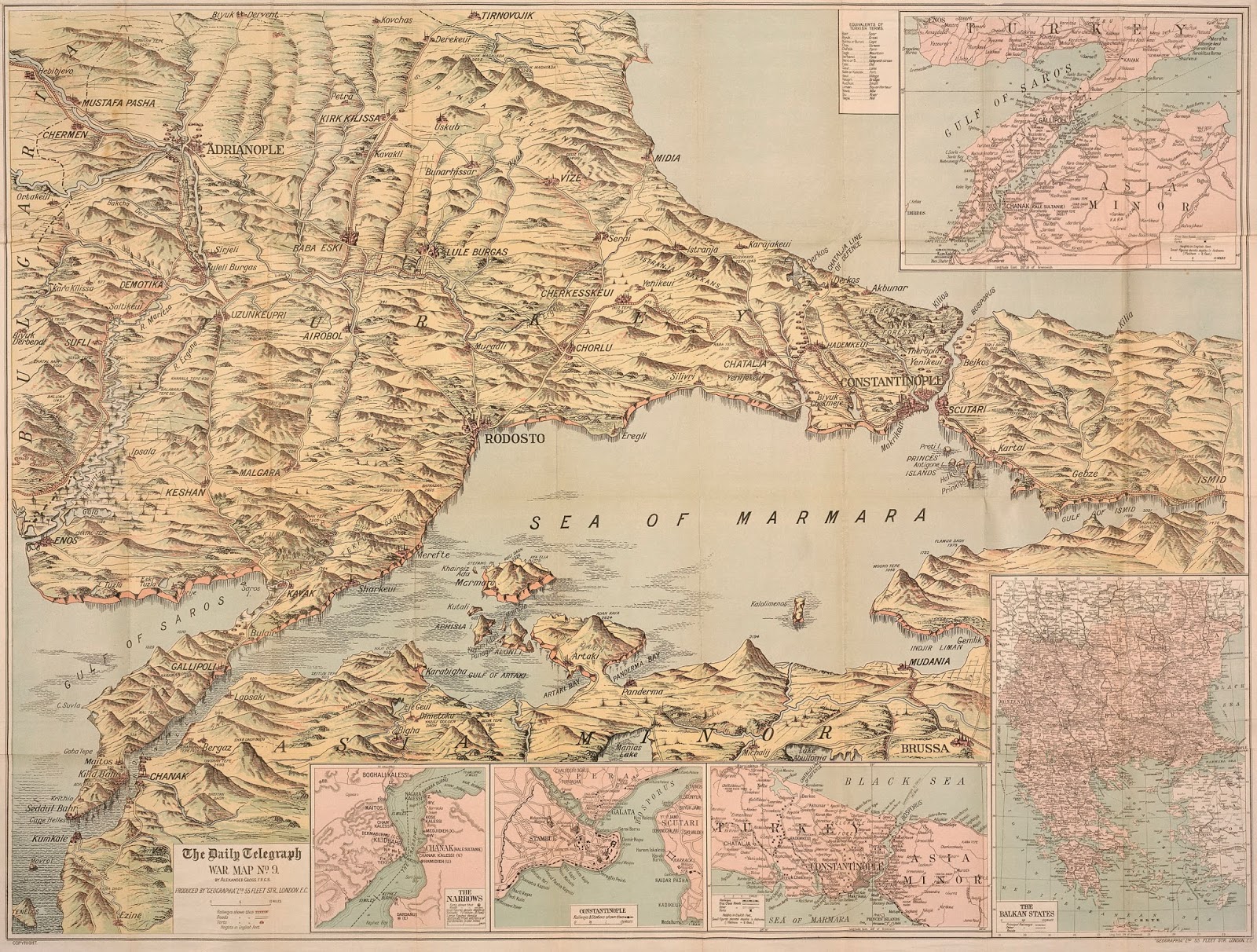
Maps of Gallipoli

Image
Sir George Grey Special Collections hold a number of First World War maps of Gallipoli and surrounding regions. Seven of these maps have been digitised and are accessible via the Heritage Images database. In April 1915, New Zealand soldiers, alongside those from Australia, Britain and France, invaded the Gallipoli Peninsula. This was to ensure an Allied naval force could break through the Dardanelles Strait and seize or threaten the Ottoman capital of Constantinople, and hopefully the Ottoman Empire might be forced out of the war. The British landed at Cape Helles on the southern tip of the peninsula, while the Australian and New Zealand Army Corps (ANZACs) landed half way up the peninsula, in order to cut off the Ottomans’ supply route to the south. Neither force managed to achieve their primary objectives and the conflict soon turned into a stalemate of trench warfare. Ref:  The Daily Telegraph picture map of the Dardanelles... , 1915, Sir George Grey Special C...