Posts

Showing posts with the label Maori

Lived Land: Tiritiri Matangi before the sanctuary

Image
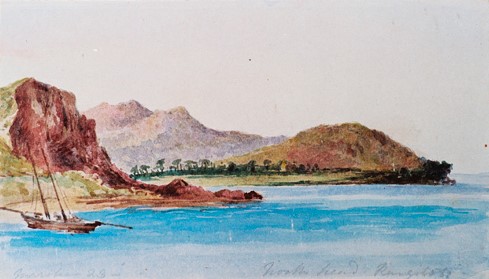
Only a scenic 80-minute ferry ride from the heart of the Auckland CBD is Tiritiri Matangi Island. Sitting in the Hauraki Gulf just off the Whangaparāoa Peninsula, the island today is best known as a native bird sanctuary: a haven of birdsong, guided walks, and carefully restored bush. For many Aucklanders, Tiritiri Matangi represents a conservation success story.  Image: View from Tiritiri Matangi today.  Yet, this is a relatively recent understanding of the island’s story. Long before the island became a sanctuary, it was a lived and used landscape. Tiritiri Matangi has been shaped by human movement, conflict, labour, and law. A bastion of sedimentary rock, the island was fished, occupied, claimed, cleared, and transformed. The histories embedded in its land predate conservation by centuries. Māori occupation and use  As one of the islands in the Hauraki Gulf, Tiritiri Matangi holds deep significance in Māori history. Going so far as back to 1400 A.D., Tiritiri Matangi w...

Play it again, Aunty Bea!

Image
  Aunty Bea is a legend. Piatarihi Beatrice (Bea) Tui Yates, Te Arawa, Tainui, Ngāti Rangiwewehi, Ngāti Whakaue, Ngāti Rangitihi, Ngāti Uenuku Kōpako, Ngāti Pikiao, Ngāti Awa (AKA Aunty Bea) is one of the most gifted, clever and exceptional kaituhi Māori around. She was a force in the advocacy of human rights and Indigenous rights. Along with wāhine toa, like Toi Te Rito Maihi, Katarina Mataira, and Ngahuia Te Awekotuku, Aunty Bea lead the te reo Māori revival renaissance from the 70s and 80s. As a vital figure in Māoridom, she supported the rise of the Kōhanga Reo movement  through her exceptional creative spirit, and her knowledge of te reo Māori, and pūrākau, particularly that of Te Arawa.  Image: ' Hera and her Kuri ' by Piatarihi Yates She is well known in Aotearoa for writing bilingual books and Māori readers for local schools and Kohanga reo. Her books, including the readers, were and still are used in kura and kōhanga reo to support the revitalisation of our Indig...

Understanding historic Māori fluidity within Ngāti Te Ata Waiōhua

Image
What does the term ‘Tāmaki Makaurau’ mean? Some would argue that it means ‘Tāmaki of a hundred lovers’, while others would claim it means ‘Tāmaki desired by many’ or ‘Tāmaki the bride sought by a hundred’(1). No matter which meaning you prefer, they all clearly suggest that Tāmaki has long been a place sought after by many rōpū (groups). Over the course of its more recent history, Tāmaki has become the seat of multiculturalism in these motu. At different points roughly over the last two centuries Pākehā, diverse Asian peoples, tangata o te Moana Nui a Kiwa and diasporic Māori have come to call Tāmaki home.  Centuries before this multi-ethnic rōpū found residence in Tāmaki, several ancestral tangata whenua groups sought sustenance and security here. These rōpū recognised the special position of Tāmaki, situated on a fertile volcanic field and lined with awa allowing for easy access to multiple moana. Over time through exercising their mana, these groups would become the mana whenua ...

Takapuna: A Name for Many Things

Image
What is Takapuna? The te reo Māori proper noun has been adapted for use as a place name, a personal name, and many other things besides since its introduction in Aotearoa many centuries ago. Its origins are relatively clear, but how and when the word arrived in Aotearoa is disputed. Still, the name is unique. Nearly all instances of Takapuna worldwide can be traced back to the North Shore of Tāmaki Makaurau. This article gathers some of the better-known narratives regarding the history of the name, but it is not intended to be definitive—there are other traditions that are equally important to the story of Takapuna. Image: Caroline Harriet Abraham. North Head and Rangitoto, ca 1853. Auckland Libraries Heritage Collections, 3-111-4 . The story of Takapuna begins not with the name but rather a place. Tens of thousands of years ago, a volcano broke through fractured continental shelf to create a steep headland at the southern end of the North Shore. Millennia later, the legendary Polynesi...

Locating Māori combatants from the Second World War

Image
Māori Battalion, march to victory … However, when entering metadata for Auckland Weekly News subject headings one of the first things to remember is that Māori combatants in the Second World War were not necessarily members of the 28th Māori Battalion. There were Māori soldiers in other battalions or army units, Māori airmen in the Royal New Zealand Air Force and Māori sailors in the Royal New Zealand Navy (although I have only finished from 1939 to 1942 so far and have not come across any Māori sailors in the Roll of Honour yet; and the war is still a work in progress!). Using a few servicemen, here are some examples of the way we can find extra information about Māori combatants from the Auckland War Memorial Museum’s Cenotaph Database and the battalion roll on the 28th Māori Battalion website . The 1942 Roll of Honour contains three Māori airmen. The first we come across is Sergeant Herbert Samuel (or Bert Sam) Wipiti. Before the war Bert was a junior refrigerati...