Posts

Showing posts with the label New Zealand

The Reality of Grandma's Cooking : Nutrition in Mid - Twentieth Century Aotearoa New Zealand

Image
Figure 1: Michael Pollan, In Defense of Food: An Eater’s Manifesto, New York: Penguin Books, 2009.  In the ‘noughties’, Michael Pollan’s In Defense of Food helped to popularise an approach to eating framed around a central tenet – ‘Just eat what your great-grandma ate’, suggesting those in pursuit of perfect health should avoid consuming anything from a packet or a production line.  As journalist and author, Pollan sought to disrupt understandings of nutrition and consulted a variety of different nutrition specialists to put together the book, as Pollan saw fit. As such, Pollan consulted Jewish and Italian grandmothers as expert diet authorities, alongside those with professional training in nutrition and dietetics, as well as doctors, nurses, and anthropologists. In an interview with the New York Times, Pollan recounted his favourite quote from the grandmothers he interviewed to research his book: “The whiter the bread, the sooner you’ll be dead”, these women reportedly advi...
New Year’s Festivities

Image
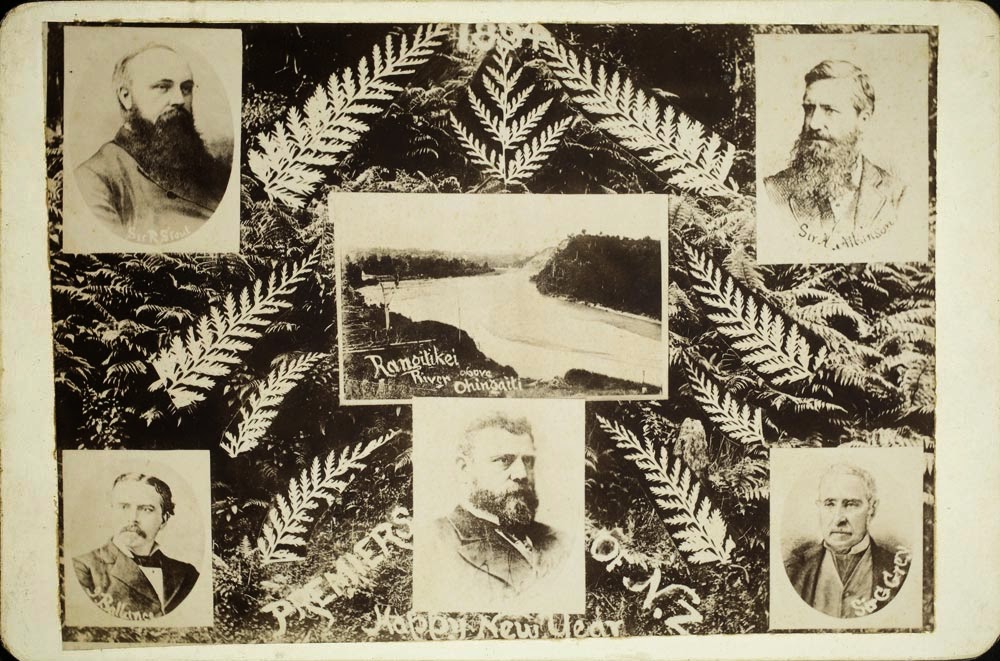
To see off the old year and help usher in the new we thought it would be appropriate to see how the New Year has been celebrated down the years: Ref: P.P. De Loree, Premiers of N.Z. Happy New Year, 1894, Sir George Grey Special Collections, Auckland Libraries, 661-67. Ref: Motor car invasion, Cockle Bay, 1939, 1 January 1939, South Auckland Research Centre, Auckland Libraries, Footprints 15.

Riverhead Dump Photograph Collection

Image
We’re very pleased to announce that we've recently had a new collection of photographs from Sir George Grey Special Collections added to Heritage Images . The intriguingly named ‘Riverhead Dump’ collection has a very interesting story behind it.  Ref: Unidentified harbour, Sir George Grey Special Collections, Auckland Libraries, 1055-60.

Radcliffe's scenes

Image
Sir George Grey Special Collections has a large collection of glass plate negatives of scenic views of New Zealand taken by Frederick George Radcliffe . Ref: F G Radcliffe, Lake Kaniere, Sir George Grey Special Collections, Auckland Libraries, 35-R644 Radcliffe came to New Zealand from England in the early 1890s. Soon afterwards his wife, Kate, and their two daughters, Harriette and Olive, joined him at his farm 'Utopia' near Paparoa, on an inlet of the Kaipara Harbour. Radcliffe's interest in photography grew and he quickly acquired a reputation as an exceptional scenic photographer. For twenty years he traveled the country taking photographs of small rural towns, large cities, rivers, gardens, buildings, beaches, wharves, forests, lakes and streets. From 1909, with the help of Kate and Olive, he operated a successful postcard business from his home in Whangarei. Radcliffe played the oboe, conducted local orchestras and was an active member of various music-relat...

The Womens Suffragette movement in NZ and Britain

Image
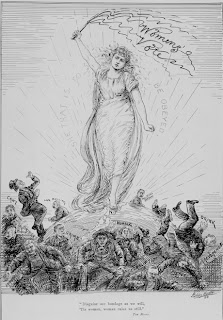
The 19th September marks Suffrage Day in NZ . This year's anniversary is extra special, since it marks 120 years since Kiwi women won the right to vote in national parliamentary elections in 1893. The Governor, Lord Glasgow, signed the landmark legislation, which made the new Electoral Act into law. In doing so, NZ became the first self governing country in the world to give women this right. Ref: 7-A12543, A cartoon by Ashley Hunter on Women's Vote, 30 Sept 1893, Sir George Grey Special Collections Also of importance during 1893, was the election of the first female mayor in the British Empire. Elizabeth Yates became the Mayor of Onehunga Borough Council in 1893 and served until 1894. She also was a councilor from 1899 - 1901. Despite the sexism Elizabeth endured her time as mayor, she made a huge impact - reduced the debt of the council, kept the streets and footpaths maintained and made an impression on Parliament when lobbying for the Onehunga Cemetery Bill. Ref...

Captain Cook journal comes back to NZ

Image
When the the Ocean liner Queen Mary 2 docked at Auckland Harbour on Monday 11 March, on board was a VIP in the form of Captain Cook's draft journal. Letters by Cook detailing the first voyage and his personal tea caddy and spoon were also on board the ship. The brief return of this journal marks the first time it has been in the country since it was written by Cook. Complete with scribblings and crossing outs, the handwritten account describes Cook's first circumnavigation of New Zealand during 1769-1770 and the infamous encounter with Māori at Poverty Bay. Captain James Cook was the first European to explore and map the coastline of New Zealand extensively. On each of his three voyages to the Pacific he was accompanied by artists and scientists. Accounts of each voyage were published both by Cook and others on the expeditions. Ref: 4-1347, Captain Cook, Sir George Grey Special Collections