Posts

Showing posts with the label WW1

Maps of Gallipoli

Image
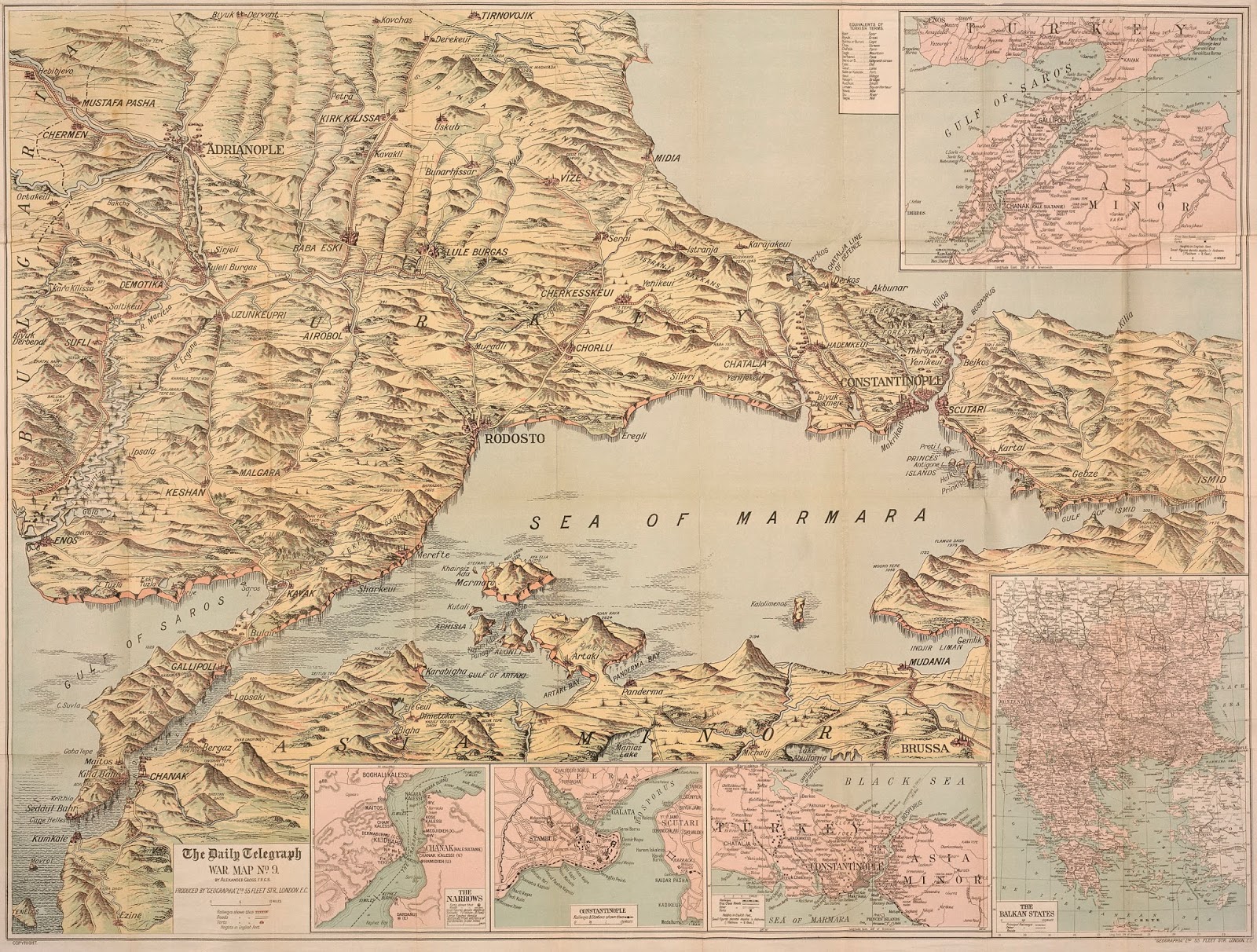
Sir George Grey Special Collections hold a number of First World War maps of Gallipoli and surrounding regions. Seven of these maps have been digitised and are accessible via the Heritage Images database. In April 1915, New Zealand soldiers, alongside those from Australia, Britain and France, invaded the Gallipoli Peninsula. This was to ensure an Allied naval force could break through the Dardanelles Strait and seize or threaten the Ottoman capital of Constantinople, and hopefully the Ottoman Empire might be forced out of the war. The British landed at Cape Helles on the southern tip of the peninsula, while the Australian and New Zealand Army Corps (ANZACs) landed half way up the peninsula, in order to cut off the Ottomans’ supply route to the south. Neither force managed to achieve their primary objectives and the conflict soon turned into a stalemate of trench warfare. Ref:  The Daily Telegraph picture map of the Dardanelles... , 1915, Sir George Grey Special C...

Trevor Lloyd’s War

Image
Trevor Lloyd was a New Zealand artist, illustrator and cartoonist who lived from 1863 to 1937.  He was largely self-taught although he might have had some lessons from the artist Louis John Steele.  He started doing sketches and caricatures but soon moved on to oil paintings based on his sketches. Lloyd first exhibited his work at the Auckland Society of Arts in 1883.  He re-exhibited at the society in 1896, 1898 and 1899.  By the 1900s he had moved to Auckland and was making a living from his art.  He began illustrating stories and articles in the New Zealand Illustrated Magazine and the New Zealand Graphic .  In 1903 he joined the Auckland Weekly News as an illustrator, graphic artist and cartoonist.  From 1904 his cartoons also appeared in Wilson and Horton’s other publication, the New Zealand Herald .  He retired from the Herald and Weekly News in November 1936. The Angela Morton collection , housed at Takapuna Library, holds a coll...

James Hartley Warburton: A West Aucklander who served in WWI

Image
Eli and Selina Warburton of Lancashire, England, had 2 children, James Hartley and Edna, while living in England. The Warburton family immigrated to New Zealand in the early 20 th Century. The Warburton family: from Lancashire to New Lynn The 1901 UK census shows that at 3 years old James Hartley Warburton was living with his father Eli Warburton (31 years old), cotton weaver, his mother Selina Warburton (26 years), and his sister Edna (2 years old) at 18 Merton Street, Lancashire. The NZ Electoral Rolls show that the Warburtons were living in New Lynn by 1911.  If you would like to search the 1841-1911 UK Census records they are easy to access for free at any of the Auckland Libraries through the   Ancestry and FindMyPast databases  in the Digital Library. The New Zealand electoral rolls are available on microfiche at Auckland Libraries’ Research Centres as well as online at Ancestry. Opening Day at New Lynn School Ref: Opening day at New Ly...

Remembrance on Armistice Day

Image
Today, November the eleventh, is the anniversary of Armistice Day, which commemorates the signing of the armistice between Germany and the Allies to end fighting on the Western Front of World War One. The Auckland Weekly News Photographic Supplement contains many images relating to Armistice Day beginning with the singing of the armistice in 1918. The selection of photographs below show how Armistice Day was remembered by earlier generations around New Zealand and the Pacific: Ref: Auckland Weekly News, parade of school cadets in Queen St., 17 November 1921, Sir George Grey Special Collections, Auckland Libraries, AWNS-19211117-34-1

Our girls, our boys

Image
For the past few months, the heritage floor, on the second floor of the Central City Library, has hosted a display titled Our Girls -- a tribute to the role of women in the First World War. The content covers the following topics: prohibition and making-do, cartoon depictions of women, the anti-militarists, the fundraising effort, working girls, nurses abroad, and the absence of men. It has been an interesting exercise to find images to cover such a variety of topics. Women were not always portrayed favourably, especially in the political cartoons of the day. Publications like Freelance and Truth condemned the ‘wowser’ prohibitionists as out to spoil a boy’s fun (men did not escape the condemnation, either) or they depicted women as vain and ignorant.  Ref: Cartoon from the New Zealand Freelance , 6 March 1915, p.11.  The caption for the cartoon above reads:  Shopman: “Yes, Miss, all face powders have gone up in price on account of the war.” Y...

Munitionettes

Image
Recently, an advertisement from a page in a journal, displayed in the current  Sir George Grey Special Collections  exhibition:  World War 1914 -1918 , made me look closer. The product is soap and the accompanying illustration is not unusual or incredibly striking. It was the text which made me pause, as it reminded me of scenes in Pat Barker's novel  Regeneration . In particular, the lives of a group of munitionettes, who provide an insight into an element of home front life during the First World War. Ref:  The sphere. Vol. 76, no. 995. London: Illustrated Newspapers, 1918. Munitionettes were British women employed in munitions factories during the First World War. These women worked with hazardous chemicals on a daily basis with minimal protection. Receiving an injury or getting killed by an explosion were always possibilities. Many munitionettes worked with TNT, which after prolonged exposure, would turn their skin a yellow colour -- leadi...

Victor Albert Kelsall

Image
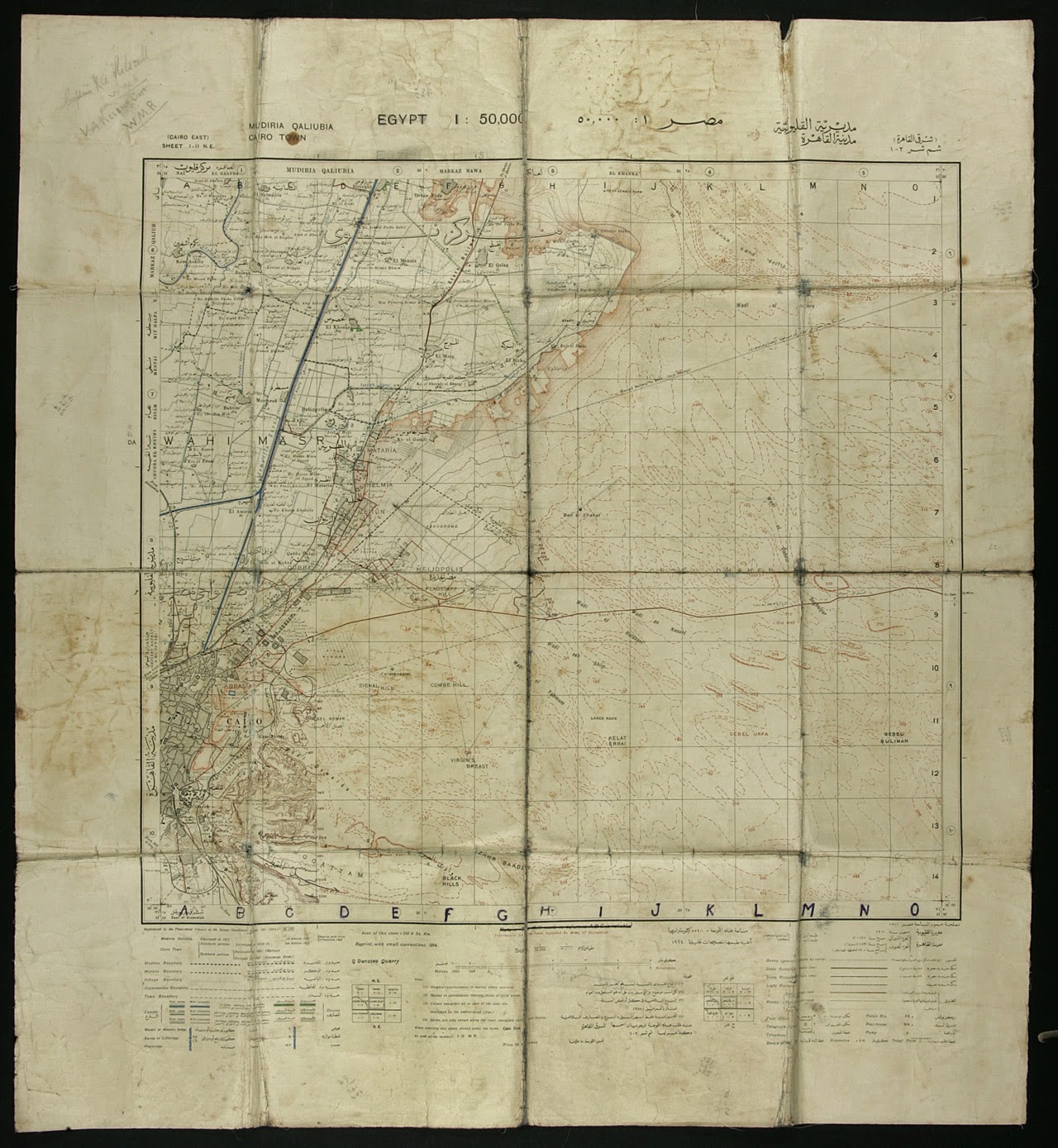
While selecting material for the exhibition ' It’ll be over by Christmas: World War 1914-1918 ', I came across a map showing  Zeitoun Camp  on the outskirts of Cairo in Egypt. This is where the New Zealand soldiers trained before being shipped off to various locations on the fronts to fight. Ref: NZ Map 8064, Sir George Grey Special Collections, Auckland Libraries

Rua Kēnana - Māori prophet

Image
Rua Kēnana (1868/1869 - 1937), who was also know as Ruatapunui, was a Tūhoe prophet. He called himself the Mihaia / Messiah and claimed to be Te Kooti Arikirangi 's successor Hepetipa (Hephzibah) who would reclaim Tūhoe land that had been lost to pakeha / European ownership. Rua's beliefs split the Ringatū Church , which Te Kooti had founded in around 1866/1868. Ref: George Bourne for Auckland Weekly News, Rua Kēnana, c. 1900-1909, no location, Sir George Grey Special Collections, Auckland Libraries, 7-A3324 In 1907 Rua formed a non-violent religious community at Maungapōhatu, the sacred mountain of Ngāi Tūhoe, in the Urewera. By 1900, Maungapōhatu was one of the few areas that had not been investigated by the Native Land Court . The community, also known as New Jerusalem, included a farming co-operative and a savings bank. Many pakeha believed the community was subversive and saw Rua as a disruptive influence. Ref: Auckland Weekly News, the ...

Mt Roskill’s Victory Estate

Image
It is always fascinating to discover why the street you live in is given a particular name, and for residents of a block in Mt Roskill, Auckland, there is a marvellous history behind theirs. It is a group of streets that was known as the Victory Estate – located up at the Mt Roskill end of Dominion Road in Auckland. The subdivision was purchased by a syndicate in 1920, as reported in the NZ Herald newspaper . The land had been held for the past 50 years by the Wesley Training College who had possessed huge amounts of land in the area. It was described as “beautiful high green slopes …. Commanding magnificent views over Mount Eden” ( New Zealand Herald , Vol. LVII, Issue 17412, 6 March 1920, p.9 ). Ref: DP Plan 16857, North Auckland Land District, Plan of Auckland Suburb, IV Titirangi S.D., Mt Roskill Road District, 1923

NZ Women who fought against WWI

Image
The declaration of war was greeted so enthusiastically in NZ that many anti-militarist groups lowered their profile. This included the National Peace Council, whom in 1914 suspended all public work, saying “the war fever is too acute to allow of any meetings being held” (Hutching, M., 2007, see full reference below). Most NZ women supported the war effort, but some were bold enough to agitate for international arbitration and an end to war. The Canterbury Women’s Institute , the Women’s International League and The Housewives Union formed part of the nucleus of the anti-war movement in NZ. Ref: Front cover of Women for Peace & Freedom by Betty Holt (1985) 

Ministering Angels in time of suffering

Image
Ref: James D Richardson, Steamship Maheno used as First World War hospital ship, no date, no location, Sir George Grey Special Collections, Auckland Libraries, 4-1624 During the First World War not all women saw their role as the person to keep the home fires burning. Those armed with nursing qualifications and the spirit of adventure enrolled to serve their country overseas. These dedicated professionals included nurses from the South Auckland area, who served in the New Zealand Army Nursing Service with the New Zealand Expeditionary Force. Ref: Auckland Weekly News, NZ and Aus soldiers on board a hospital ship, on the way from Lemnos Island to Alexandria, Eyqpt, 1915, Sir George Grey Special Collections, Auckland Libraries, AWNS-19150701-47-2 This post is dedicated to some of these nurses who trained in Auckland between 1912 and 1916, with the exception of Ethelwyn Carruth who trained in Thames in 1914.

Sports days

Image
The annual sports day - a ritual in the school calendar. Egg and spoon race, three-legged race, long jump, running, tug-of-war - these are always fun packed events! Its not just children though that get involved, adults are also keen to get in on the action, as the heritage photographs below show. The annual NZ community sports day was taken and adapted from those in Britain - particularly the Scottish sports days, where professional athletes compete in a wide array of contests, including wood chopping! Sports days have also been held for a wide variety of reasons: to acknowledge and commemorate particular days of the year, such as Labour Day and to raise funds for charity. This included sports days held on the home front during the First World War to raise funds for the troops. During this war time period, sports days were also held overseas on the fronts, to encourage fitness in the NZ troops, raise morale and encourage camaraderie. Enjoy this action packed tour through sports ...

'It'll be over by Christmas' - First World War exhibition at the Central City Library

Image
It was an appropriately dark and stormy night in Auckland for the opening of ' It’ll be over by Christmas ' - an exhibition about the First World War (1914-1918) at the Central City Library (9th July-12 October 2014). The guests crowded in to the exhibition ahead of the formalities and made their way back there afterwards. Ref: Paul Nash, ‘The field of Passchendaele’, from the British artist at the Front, ‘Country Life’, 1918 Bobby Newson from Te Waka Angamua (the Māori Strategy and Relations Department within council) opened the evening with a karakia/prayer and set the scene back 100 years ago. Allison Dobbie, Libraries Manager welcomed the guests and introduced the mayor. Mayor Len Brown discussed the many and varied commemorative activities Auckland Council is delivering. This includes the new Heritage Trail for Auckland sites of First World War significance, which opens in August this year.

Music and the First World War

Image
Music in the First World War played a number of different roles on both the battlefields and back on the home front. On a basic level, music was a good form of entertainment and was a focus for social gatherings. Due to its popular nature, music is able to infiltrate into all aspects of life. During the war, governments quickly saw its potential to inspire a sense of national pride, patriotism , to promote recruitment for soldiers and garner support for fund raising efforts. It was also used as a powerful way to shame conscientious objectors and others who didn't support the war. The catchy melodies and rhythms can therefore be seen as a form of propaganda. Most songs from the First World War period did not reflect the brutal reality of war, instead they suggested that all would be fine and that the war would end soon. Ref: Natasha Barrett, military band at Auckland War Memorial Museum, Anzac Day, 25 April 2010

Horses in the First World War

Image
Animals played a vital part during the First World. None more so that the horse. The conflict began with the cavalry forces but as the war progressed, horses were gradually replaced by the introduction of tanks. However, horses still played a vital part in the war. The use of horses varied but the United Kingdom used mounted infantry and cavalry charges throughout the war. Shipping conditions for horses were not ideal and many arrived in poor condition. There was also no return journey for the remaining horses at the end of the war. Some were given to the British Army but the majority were sadly destroyed. One or two did make the journey home including Colonel C. G. Powles’ horse Bess and there is a memorial to her near Flock House in Manawatū. Ref: Auckland Weekly News, the NZ Expeditionary Force who are now serving in Egypt, no location, 1914, Sir George Grey Special Collections, AWNS-19141210-47-1 Horses were used for a variety of jobs, moving heavy artillery, transportation...

Remembering tūpuna who served in the First World War

Image
During the First World War, over 2,000 Māori served under the Native Contingent and the Māori Pioneer Battalion. Conscription of Māori did not take place until 1917, prior to this date, Māori involvement was purely voluntary. Changes put in place in late 1915/early 1916 led to the disestablishment of the Native Contingent and the incorporation of Māori soldiers into the New Zealand Pioneer Battalion, which is more commonly known as the Māori Pioneer Battalion. Ref: Herman John Schmidt, three privates including Pitama probably of the NZ Maori Pioneer Battalion, no location, c. 1915/1916, Sir George Grey Special Collections, Auckland Libraries, 31-P917

Dogs in the First World War

Image
The contributions of animals during war is often not acknowledged. Dogs as well as carrier pigeons, horses and mules all played their part during the First World War. Britain had an estimated 20,000 dogs by 1918. Dogs played a variety of roles during the war depending on their breed, intelligence and the training they had received. This included as: sentries - quietly letting their masters know if the enemy was approaching  scouts - patrolling ahead and detecting the enemies' scent and alerting their masters by 'pointing' in the direction of the approaching enemy casualty - finding the wounded or dying on battlefield and carrying medical supplies to the wounded who were able to tend to their own wounds messengers - carrying messages, particularly in the trenches where communication was difficult mascots - these were often the officer's dog in a military unit and were intended to boost morale amongst the soldiers. Ref: Auckland Weekly News, Dog auctioned f...

Maori in the First World War: How the Māori Pioneer Battalion was formed

Image
Following on from an earlier blog post this week , which discussed the establishment of the First Māori Contingent, this post looks at the involvement of these troops during the First World War. Following severe New Zealand losses the Māori Contingent were sent to Gallipoli in July 1915. They landed at ANZAC Cove on 3 July and were attached to the New Zealand Mounted Rifles Brigade.  They were employed as pioneers, digging trenches and clearing mine-spoil at Quinn’s Post and dragging water-tanks up onto Plugge’s Plateau.  They dug the Great Sap, which was an eight-foot deep communication trench wide enough to carry two stretchers side-by-side.  This ran along the beach connecting Walker’s Ridge with the northerly outposts of the ANZAC perimeter. However Māori soldiers were soon fighting in a combat role.  Second Lieutenant Thomas Grace led a team of marksmen and scouts who cleared Turkish snipers from Monash Gully. The Māori Contingent pushed the Turks off Table ...

Maori in the First World War: The First Māori Contingent

Image
Māori support for New Zealand’s recruitment effort during the First World War varied. Some tribes volunteered in large numbers but from others there was no response at all. This unevenness reflects the varying impacts of colonialism experienced by different iwi/tribes. Iwi who had suffered land confiscations often rejected calls to participate in the war. Recruitment was greatest among iwi traditionally allied with the British Crown in the various NZ wars fought during the 19th century. These tribes included Ngāpuhi and other far northern tribes, Ngāti Kahungungu, Te Aitanga-a-Mahāki, Te Aitanga-ā-Hauiti and Ngāti Porou from the east coast and Te Arawa from the Bay of Plenty. Kaumatua/elders from these iwi encouraged their youth to volunteer and honour their obligations to citizenship and the Treaty of Waitangi. Ref: AE Watkinson for Auckland Weekly News, Māori troops from Wangauni, 1914,Sir George Grey Special Collections, Auckland Libraries, AWNS-19141029-36-4 Young Māori Party...

Anzac Day

Image
This year's Anzac Day takes on special significance with the start of the upcoming centenary of the First World War being marked in August. The library also has a range of heritage images showing Anzac Day scenes over the years, such as services, parades, memorials and banners. You can search for these by using the keyword Anzac in the search box of  the heritage databases:  Heritage Images , Local History Online and Footprints . We have put together a selection for you below and as you look through these, take a moment to remember all the servicemen and servicewomen who have served for their country. Services: Ref: Photographer unknown, Anzac Day ceremony, Papatoetoe, c. 1970s, photograph reproduced by courtesy of Mr Neil Closey (via Cheryl Fowler), South Auckland Research Centre, Auckland Libraries, Footprints 01506 Ref: Photographer unknown, Anazac service, Auckland Town Hall, corner of Greys Ave and Queen St, c. 1922-1929, Sir George Grey Special Collections...