Posts

Showing posts with the label Warkworth

Culture, entertainment and leisure in Wellsford and nearby locations, Pt 1

Image
When they came to Aotearoa, Tangata whenua brought cultural practices with them. These continued to change and adapt to local circumstances. Te Ara has a story on Whakairo / Māori carving and its origins. This story states that by 1800 a ‘Serpentine’ (tuare) style developed in the northern regions of Aotearoa (associated with Hokianga, Hauraki, East Cape and Taranaki, and exemplified by Ngāti Whātua carvings). “The tubular bodies are usually uncarved, but if surface decoration is applied the unaunahi (fish-scales) pattern is the most common, especially in the north... Unaunahi is most prevalent in Te Tai Tokerau (Northland)…” Ref: Auckland Weekly News, A trough shaped curio..., 11 September 1902, Sir George Grey Special Collections, Auckland Libraries, AWNS-19020911-12-3.
Warkworth Town Hall

Image
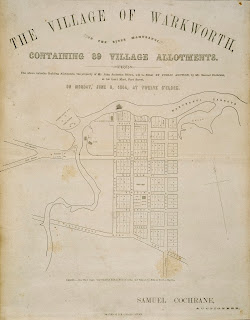
Warkworth township was established in 1853 by John Anderson Brown, a businessman from Warkworth in Northumberland, England. The area reminded Brown so much of his hometown, that he gave it the same name. Brown purchased 153 acres and drew up a plan for subdivision of the area, which included land for the Anglican Church and its cemetery. Ref: NZ Map 4498-26, map showing allotments for sale in Warkworth, 1864, Sir George Grey Special Collections Farming along with fruit farming was important to the area, but key to the success of the town was kauri timber. Another major industry was the lime and cement works, which were established in 1865 and were successful up until the relocation of the business to Whangarei in 1928. Cement made in Warkworth was used in the construction of Auckland’s Grafton Bridge in 1910, which was the largest concrete bridge in the world at the time. Ref: AWNS-18990915-8-1, view of Warkworth in 1899, Sir George Grey Special Collections