Posts

Showing posts with the label dance halls

Dalmatians out west: music, dance, social occasions and weddings
Image
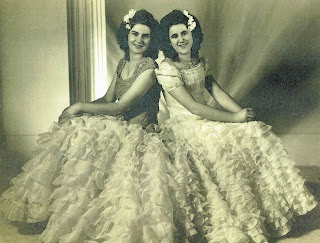
Now on in the J.T. Diamond Room, Waitakere Central Library is our Dalmatians out west exhibition. The exhibition features images from Auckland’s Dalmatian community and will run until 30 August 2016. This is the second in a series of blog posts based on the themes in the exhibition. Music, dance, social occasions and weddings Music and dance were mostly the domain of the two Yugoslav organisations , the Yugoslav Club Inc., and the Yugoslav Benevolent Society (The Croatian Benevolent Society).  Annual Ballroom competitions were conducted and cups were given out to the best foxtrot, waltz and tango dancers.  Ref:  Sisters Danica and Fleur Martinovich dressed for the ball in dresses they made themselves, 1946.  West Auckland Research Centre, Auckland Libraries. DGHS Collection.

Culture, entertainment and leisure in Wellsford and nearby locations, Pt 1

Image
When they came to Aotearoa, Tangata whenua brought cultural practices with them. These continued to change and adapt to local circumstances. Te Ara has a story on Whakairo / Māori carving and its origins. This story states that by 1800 a ‘Serpentine’ (tuare) style developed in the northern regions of Aotearoa (associated with Hokianga, Hauraki, East Cape and Taranaki, and exemplified by Ngāti Whātua carvings). “The tubular bodies are usually uncarved, but if surface decoration is applied the unaunahi (fish-scales) pattern is the most common, especially in the north... Unaunahi is most prevalent in Te Tai Tokerau (Northland)…” Ref: Auckland Weekly News, A trough shaped curio..., 11 September 1902, Sir George Grey Special Collections, Auckland Libraries, AWNS-19020911-12-3.

How I met your mother? Pt 1: Nightclubs and Dance Halls in the 1950s & 1960s

Image
Dance halls and night clubs were a great way for young people to meet, enjoy music, dance and socialise in the 1950s and 1960s. After World War II many Auckland teenagers had jobs, which meant they had the means and the time to enjoy the freedom of dance halls and night clubs playing pop, rock and roll music and jive. There were many inner city night club and dance venues that served soft drinks only. The  Church of the Holy Sepulchre  (known as “St Septs”) dances in Khyber Pass were easy to attend as it was close to most tram and bus routes in Auckland. Ref: Auckland Council, the Holy Sepulchre Church in Khyber Pass, Auckland, c. 1960-1979, Sir George Grey Special Collections, Auckland Libraries, 435-C5-67A