Posts

Showing posts with the label graves

Silence and resonance: memorialisation of infant mortality in Auckland, 1860-1910

Image
In October 1867, a milkman named William Stonex was on his morning rounds in Auckland Central when he noticed a collection of fabric lying in a gutter. He turned it over with his foot and, deciding that the bundle was unusually heavy, called to a nearby servant girl named Rebecca Hall. When Hall fetched a knife and cut open the package, she and Stonex discovered a dead baby wrapped in calico. Mr Craig, a local plumber, and Hall’s employer, agreed to “see about it” and Stonex continued with his route. The police were summoned, and a coronial inquest was held in an attempt to discover the cause of death of the female infant, who was just days old at the time of her death. Although the doctor on the case suspected that her umbilical cord had been tied incorrectly, the jury found that, due to a lack of evidence, they could not ascertain a cause of death. Her mother was never found, and it is unclear where she was buried.   Image:  An 1863 map showing the section of Hobson Str...

QR codes offer a way to provide living legacies on grave stones

Image
St Margaret’s Church , an important Welsh landmark in Bodelwyddan, is using QR code technology to help visitors understand the seemingly confusing presence of  80 Canadian soldiers graves. Ref: AWNS-19170104-38-3, Sir George Grey Special Collections The Marble Church as it is known, is using the HiPoints system (historical points), which has been created by historypoints.org , a community-based information project. This system uses smartphone mobile technology and QR (quick response) codes located on placards in the graveyard to provide easily digestible historical snippets about a physical location or building etc. Ref: QR code, Wikimedia Commons, Wikipedia

Waikumete Cemetery

Image
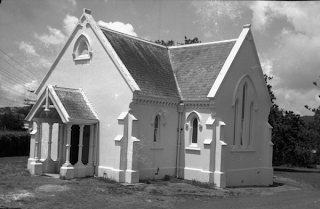
It’s dead good Waikumete Cemetery in Glen Eden is one of the most significant heritage places managed by Auckland Council. At 108 ha, it is New Zealand’s largest cemetery, the second largest in the southern hemisphere, and the resting place of over 60,000 people, some of whom played an important role in our history. The cemetery is just one of the many heritage assets owned or managed by Auckland Council on behalf of the community. Ref: JTD-12AA-02366-3, West Auckland Research Centre The cemetery opened in 1886 as a replacement for the overcrowded Symonds Street Cemetery. It was laid out by denomination and contains many historic graves and memorials of heritage significance. It includes a children’s section, soldiers’ cemetery, large lawn cemetery, Māori urupa, mass grave of over 1000 flu victims from 1918, and a memorial to the 1979 Mt. Erebus Air Disaster. The cemetery also contains a notable group of mausoleums and the historic Faith-in-the-Oaks Chapel (1886), Sexton’s ...

The Walker family of gravediggers

Image
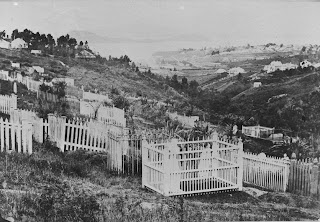
Ref: 4-319, Symonds St Cemetery, Sir George Grey Special Collections A recent article in the Western Leader describes the history of the Walker family, who were employed as gravediggers at Symonds Street Cemetery and Waikumete Cemetery over a period spanning from the mid 1840s through to early 1900s. Find out more . Ref: Waikumete Sexton's House & Cemetery, JTD-12A-02364-1, West Auckland Research Centre