Posts

Showing posts with the label portraits

Hand coloured photographs

Image
There is an immediately accessible quality about hand coloured or tinted photographs, which brings the past alive in a way that is perhaps more intimate than black and white photographs. Ref: Photographer and colourist unknown, hand coloured photograph of David Clark driving the Northcote Borough Council's dray, c. 1910, North Auckland Research Centre, Auckland Libraries, N0101008 Converting images of varying shades of grey i.e. black and white photographs, into coloured images literally involved the application of colour onto the photographic image. There were two methods by which this could be done. Hand colouring or tinting involved painting very lightly onto the surface, so that the photograph underneath was still visible. The more clumsy method of the two was over painting, whereby a heavier pigment was applied, often completely obscuring the original photograph. Prior to the start of either process, a layer of varnish was usually applied to ensure that the absorption of...

Mixed emotions

Image
One of the very human traits that is literally written all over our face, is our emotions. Be it happy or sad, scared or angry, this is usually immediately obvious by our facial expressions. Some people are able to hide their emotions well (they make great card players!) but most of us make our feelings pretty clear. Capturing these moments using a camera is a common practice and helps us to remember what was happening at the time, such as a family portrait. It is worth noting though, that people in the past viewed showing their emotions in photographs in a very different light. Have you ever noticed that people in early photographs never smile? There have been many theories regarding the reason for this - was it their bad teeth? This is unlikely since most people had bad teeth due to poor dental hygiene at the time. Ref: Herman Schmidt, Bullen family, Auckland, c. 1890s, Auckland Libraries Heritage Collections, 31-68325 One very plausible theory, is that smiles were d...

Celebrating Flowers

Image
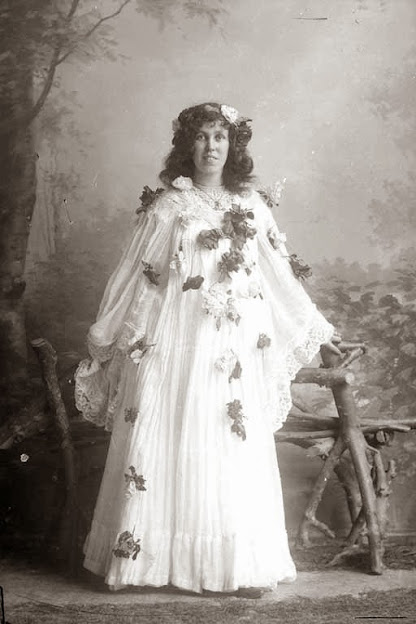
At this time of year, summer definitely feels like it is underway and so too are the beautiful array of plants in our gardens, parks and the landscapes that make up the Auckland region. With this blog post we celebrate the beauty of the natural world through the heritage collections at Auckland Libraries. You can search for images yourself by browsing through the heritage databases including Kura and  Heritage Images , by using keywords such as flowers and plants.  Portraits with flowers: Ref: 31-58309, portrait of Miss Lily Roberts wearing a gown with flowers, 1909, Sir George Grey Special Collections Ref: Footprints 01064, Nan Gilmour among the blossoms, Howick, c. 1910, photograph reproduced by courtesy of Howick Historical Society, South Auckland Research Centre Ref: 31-57964, portrait of Miss C Donne, standing, who is wearing a large hat decorated with flowers, no date, Sir George Grey Special Collections

Clifton Firth

Image
During the mid twentieth century, there was no NZ photographer more versatile, imaginative and accomplished than Reginald Clifton Firth (1904-1980). Yet he fell into photography by fluke. Ref: 34-M7B3 woman modelling a hat for Milne and Choyce department store, c. 1940-50s, Sir George Grey Special Collections When he was young, he he trained as a graphic designer at the Elam School of Art in Auckland. In the late 1920s and early 1930s he made a living as a commercial artist. By chance, a client asked for photographs of company products rather than drawings. Firth bought a camera for £4 from an Auckland shop in anticipation of the job. However, knowing little about photography and feeling concerned that he wouldn't do a good job and lose hard earned cash, he asked the shopkeeper for a money-back guarantee. He needn't have worried since the client  was delighted by the results. This changed Firth's career path forever.

Moustaches

Image
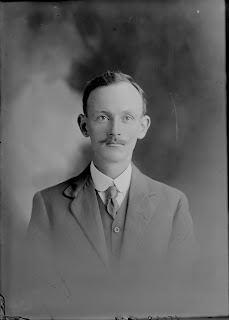
Herman Schmidt (1872-1959) was a prolific and talented Auckland photographer working at a studios on Queen Street throughout his training, professional career and eventual retirement in 1942 (see post on 1 July 2013). Schmidt's main income came from taking people's portraits. Over the course of over his career, he must have seen a whole array of people come through his door to sit for their photograph to be taken. This would have included a fair number of men with facial hair ...moustaches to be exact ...... Here is an illustrated tour through images of moustached men from the Schmidt collection at the Sir George Grey Special Collections at Auckland Central Library. Enjoy! The thin moustache: Ref: 31-65737, Mr Orr, 1911, Sir George Grey Special Collections

Herman John Schmidt

Image
It sounds like something out of a movie but it is true .... In 1970, a construction worker found a large number of glass-plate negatives stored in the attic of the Edson’s Building, a century-old structure at 270 Queen Street, Auckland which was marked for demolition . News of this discovery travelled fast and when deputy librarian Wynne Colgan and New Zealand reference librarian Pat French heard about it, they organised a speedy rescue mission. A team of determined rescuers climbed repeatedly up into the attic and carried out the precious find. Around 26,000 half plate and whole plate negatives were saved. These images represented the lifetime’s work of the gifted and versatile photographer Herman John Schmidt (1872-1959). Amazingly, Schmidt’s accession registers and day books were also found and saved - these have proved to be essential for identifying the subjects of his portraits. Ref: 31-WP626, Schmidt family, by Herman Schmidt, c.1910s, Sir George Grey Special Collections ...

Fighter pilots

Image
We have in the Central City Library an old but most gorgeous book that I would love to have a copy of. 'Pilots of Fighter Command ' (1942) is a book of 64 charcoal portraits of fighter pilots drawn by Cuthbert Orde , an artist and a pilot in the First World War. Over a one year period in 1941, Orde spent time living on RAF bases to draw pictures of the men who would become known as the “Few” -  the airmen of the RAF who flew in the Battle of Britain . The term had come from Winston Churchill’s phrase "Never, in the field of human conflict, was so much owed by so many to so few" and as Orde wrote: “I went off to find myself in the middle of  a world that was the talk of the world.” As well as the portraits themselves, the book includes Orde's thoughts on the pilots and gives an account of life on a fighter station during the Battle of Britain – “ordinary chaps doing an extraordinary thing.” Ref: Bendan 'Paddy' Finucane, from 'Pilots of Fighter ...