Posts

Showing posts with the label Footprints

Gatherings on the Manukau exhibition

Image
The Manukau Harbour is the second largest in Aotearoa. Loved and enjoyed by many, Te Manukanuka o Houturoa has always been a source for food gathering and has long provided the means for navigating the expansive coastline. Photographs from the Auckland Libraries heritage collections form the basis of this exhibition which is on now at Te Uru Waitakere Contemporary Gallery in Titirangi, Auckland. Ref: John Thomas Diamond, The shoreline on the Cornwallis Peninsula with John Diamond rod fishing, 1957. Auckland Libraries Heritage Collections, JTD-08E-00513-2 This exhibition will travel around the edges of the Manukau Harbour as if spread by Te Hau a Uru, the wind that blows from the west, from Titirangi to Waiuku. 7-28 September 2017: Te Uru Waitakere Contemporary Gallery, Titirangi. 30 September-14 October 2017: Nathan Homestead, Manurewa. 17 October-4 November 2017: Waiuku Library, Waiuku. Ref: James Richardson, Stereograph of the Nihotupu Creek, 14 April 1923. Auckland L...
Beauty pageant photographic collection

Image
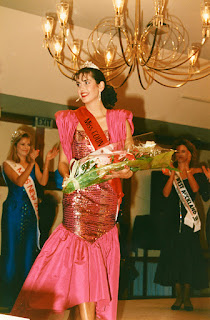
The South Auckland Research Centre has recently added 1142 photographs to our image database Footprints . To date this database now includes a selection of over 8000 photographs and other images relating to South Auckland, and adjoining areas. A sample of thirty-two photographs from the Beauty Pageant Photographic Collection , donated by beauty pageant organiser Val Lott , has been added covering the years 1990 – 2003. Ref: Val Lott, Beauty pageant, Māngere, 6 May 1990, photograph reproduced courtesy of Val Lott, South Auckland Research Centre, Auckland Libraries, Footprints 07210. Ref: Val Lott, Beauty pageant, Māngere, 6 May 1990, photograph reproduced courtesy of Val Lott, South Auckland Research Centre, Auckland Libraries, Footprints 07209. Ref: Beauty pageant, Pukekohe, 24 May 1992, photograph reproduced courtesy of Val Lott, South Auckland Research Centre, Auckland Libraries, Footprints 07223.

Our favourite photographs: South Auckland edition

Image
Inspired by a recent post on the New York Public Library's blog the team at the South Auckland Research Centre have chosen a selection of their favourite photographs from the collections there. Their choices span a century, from the 1890s through to the 1990s, and show a variety of places around South Auckland and the Counties Manukau area. Bruce Ringer The Auckland Libraries Footprints d atabase includes a wide range of captivating and illuminating photographs. It’s difficult to make a choice of favourites, but here are three that stand out in my memory. Ref: Racing boy, Pakuranga, c1905, photograph reproduced courtesy of Howick Historical Society, South Auckland Research Centre, Auckland Libraries, Footprints 39. This photograph looks straightforward but has an element of mystery. It’s a rare example from the time of a shot that captures a person in motion. But it leaves a few questions hanging in the air. Who is this boy? Why is he running? The obvious assumption i...

Jacking up the Jack

Image
The outcome of the flag referendum on 30 March 2016 shows that many New Zealanders, by choosing to keep the current flag, are still happy to have the Union Jack on it. The voter turnout of 67.8 % may indicate that the third of the population who did not vote didn’t mind whether or not the Union Jack stayed or went. Ref: Auckland Weekly News, A guard of honour for the Governor at the hoisting of the flag, Devonport, May 30 1900,Sir George Grey Special Collections, Auckland Libraries, AWNS-19000608-1-2. This was not the case a century ago when the ceremony of “unfurling the flag” became a popular event at schools across New Zealand during the late 1800’s and early twentieth century. These ceremonies were designed to instil national identity and pride in children, as well as make them appreciate the honour of the Union Jack, and by association, the country’s role in the British Empire. Ref: Flying the flag, Otahuhu, 11 August 1900, photograph reproduced courtesy of Otah...

A sense of place: the relationship between people, their landscape, and the environment over time

Image
Landscapes are important. You are born into a landscape, you walk through the landscape every day of your life, as a child and as an adult. It belongs to you, and you belong to it. Ref: Ephemera - Arts -  Māngere stories Part 1 and Māngere frequencies, 2015, South Auckland Research Centre, Auckland Libraries.

From raspberry cordial to the ‘green flash’

Image
Ref: Happy staff at Hurley Bendon, Papatoetoe, 1964, photograph reproduced courtesy of Fairfax Media, South Auckland Research Centre, Auckland Libraries, Footprints 00071. I was looking through the new publication Real modern : everyday New Zealand in the 1950s and 1960s  when I saw the tea towel. Memories came flooding back. My sister and I trapped in the small space of the dark décor in our 1970s kitchen. Doing the dishes. Who gets to dry? Who has to wash? Who decides? In 2013 our family moved into a house with no dishwasher. Great, I thought, now my teenagers can get to lead real lives, they will have to do the dishes. They will have to interact with their parents in a new and inventive way; they will have to talk to each other.  Ref: Souvenir tea towel of Mt Egmont (Mt Taranaki), c.1960, Maylin, Ireland, gift of Angela Lassig 2010. Image reproduced courtesy of Te Papa Press.  

Footloose and fancy free on Footprints

Image
It is 1964 and the world is your oyster. These young women are enjoying themselves at a friend’s 21 st birthday party in  Ōtāhuhu   in 1964. With the excitement and verve of the 1960s young women stepped out into the world with different expectations and hopes than previous generations. In the years to come the momentum for change increased, many women challenged the norm, dared to be different, and in doing so created a revolution. Ref: Lew's, Birthday Party, 1964, photograph reproduced courtesy of Val Lott, South Auckland Research Centre, Auckland Libraries, Footprints 06490. “I’m young and I love to be young I’m free and I love to be free To live my life the way that I want To say and do whatever I please”  You don’t own me , Lesley Gore, 1963 .

Remembering the Rainbow Warrior

Image
On the weekend of 25 and 26 July the Greenpeace flagship Rainbow Warrior III will be moored at Princes Wharf, Auckland. Its visit commemorates the thirtieth anniversary of the sinking of its predecessor at Marsden wharf on 10 July 1985 by agents of the French security intelligence service. Greenpeace photographer Fernando Pereira drowned on the sinking ship. The day after the act of sabotage Alton Francis snapped a shot of the half-submerged Rainbow Warrior .  Ref: Alton Francis, Rainbow Warrior, July 1985, South Auckland Research Centre, Auckland Libraries, Footprints 02431.

Bridge parties: best bib and tucker affairs

Image
Looking through the Footprints database I was surprised how many images depicting official openings of bridges there were in South Auckland. In the good old days, and even in the not so early days these ceremonies were major events on the social calendar. Everyone turned up wearing their Sunday best. Ref: David Bryan, Opening ceremony, Clevedon wharf bridge, 1908, photograph reproduced courtesy of Clevedon and District Historical Society, South Auckland Research Centre, Auckland Libraries, Footprints 02585.

Traffic jams

Image
Continuing on in a similar vein as our previous summer holiday themed posts, we thought we would focus on another common experience from the New Zealand summer holidays: traffic jams. Hopefully you've managed to avoid them over the past few weeks, but if not this selection of images will help add some levity to your memory if you did encounter one. As these photographs show, traffic jams over the summer holidays are not just a recently occurring phenomenon. Ref: Traffic jam on Upper Symonds Street, 1920s, Sir George Grey Special Collections, Auckland Libraries, 589-58.

Contemporary Pacific Collecting

Image
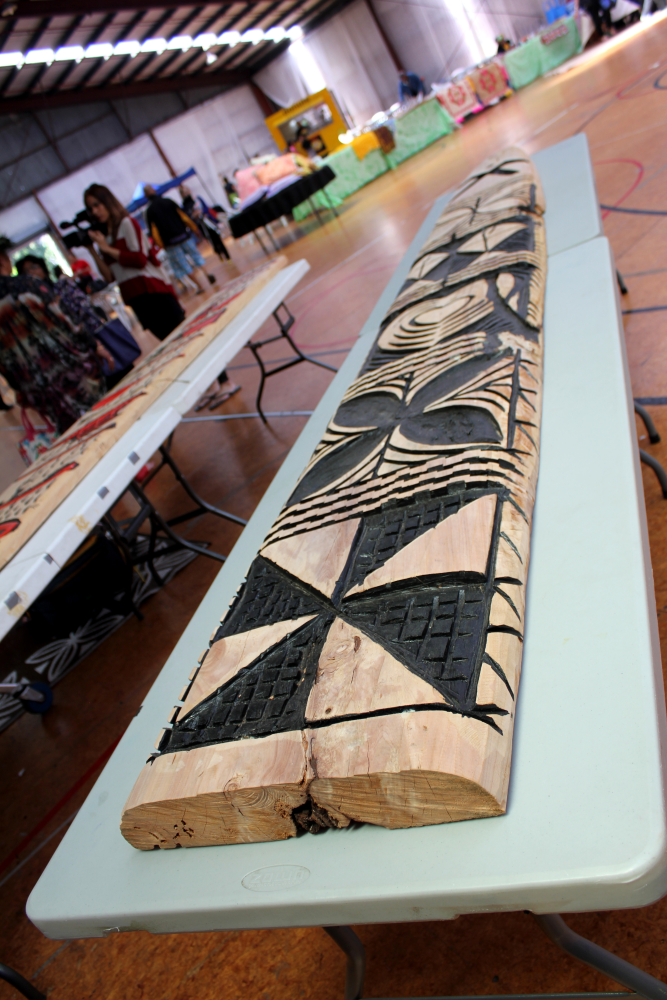
Kia ora, Talofa lava, Kia Orana, Malo e lelei, Fakaalofa lahi atu, Bula vinaka, Namaste, Malo ni, Halo ola keta, Mauri, Fakatalofa atu and warm Pacific greetings. As many previous posts in this blog and our History Pin site have shown Auckland Libraries is very active documenting Pacific history. Ref: Auckland Council. Artwork by Fatu Feu'u at the Pacifica Living Arts Festival 2014. 11 November 2014. West Auckland Research Centre, Auckland Libraries. PAC-PLAF-2014-D-261. A key role in documenting history is contemporary collecting. We have an active and targeted collecting program around Pacific events like the Pacifica Living Arts Festival . If you attended you would have seen our librarians walking around, taking photographs and talking to people. This content then gets added to Local History Online , which is a combined collection of local history indexes to images, community newspapers and oral histories. We are in the process of adding audio visual content as ...

Raising the Baa

Image
Sheep, the cornerstone of the agricultural industry in New Zealand since the 1850s and a very important part of the economy. Sheep have shaped the farming environment throughout the country and spawned many a joke. Where would we be without New Zealand lamb and merino clothing? When refrigeration on ships became available in 1882, meat was able to be shipped around the world, including to Britain, and the industry flourished. The population peaked in 1982 at 70 million but has steadily reduced over the years as other industries have come to the fore such as dairy farming and the timber industry. With around 40 million sheep, that is still a whopping 10 sheep per person. Over half the sheep in New Zealand are Romney, which is an English breed used for both meat and wool. What to find out more?  Te Ara has a great section on sheep farming and its importance . Now you are all set to wander through the sheep of yesteryear, drawn from the heritage collections at Auckland Librar...

Upper Greys Avenue flats

Image
The Housing NZ flats at 115-139 Grey Avenue (known as the Upper Greys Ave flats) are going to undergo a much needed makeover. The land behind the flats, which is currently being used as a car park, will  be sold off. The other state housing flats nearby at 95-113 Grey Ave (known as the Lower Greys Ave Flats) were upgraded 5 years ago and will also remain in state hands.   Ref: Greys Ave showing the two Housing NZ flats, Auckland Council GIS Viewer, March 2014 Prior to the building of both of these blocks of flats, the area around Greys Avenue or Grey Street as it was known them, was home to a Chinese community. It was regarded by some (including the government) as a ‘slum' and  in 1941, the Labour government, with financial backing from the council, started to clear the area, which  made way for the building of both sets of flats. Ref: 580-2234, architectural model of the multi-storey state flats in Greys Ave 1956-1957, Sir George Grey Special Collections ...

Heady Heights and Haystacks

Image
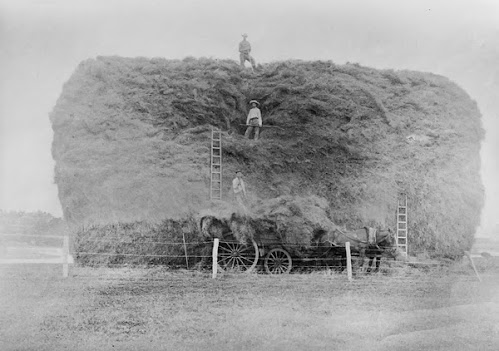
Driving in the outskirts of Auckland at this time of year you are bound to notice those large rolls of hay perched on hillsides, or perhaps the smaller oblong bales dispatched along the length of a recently chopped field. In the past the making of haystacks was an activity which provided a way of connecting the local farming communities and local families with one another. Before the advent of hay-balers these giant piles of hay required far more labour, tenacity and skill to create. Ref. Footprints 20, Giant hay stack, Mangere, c. 1905, photograph reproduced by courtesy of Mangere Historical Society, South Auckland Research Centre The stack in the photograph above was made up of hay from fields 10 acres in extent and was estimated at 60 tons in weight. Reg Wyman is on top of the stack and Geoff Mellsop on the ledge halfway down. Ref. Footprints 01307, Haystack at Flat Bush, 1956, photograph reproduced by courtesy of Mangere Historical Society, South Auckland Research C...

New additions to Footprints database

Image
South Auckland Research Centre has recently added almost 500 photographs and descriptions to its image database Footprints . The database already contains a selection 5000 of historical photographs and other images relating to South Auckland. The latest additions include a collection of black & white images from Southmall in Manurewa. The images cover the 1950s through to April 1972 and have been supplied courtesy of the Manurewa Historical Society. They include aerial shots of the shopping mall, but the bulk of the collection shows the variety of competitions and performances held at the newly opened Southmall centre during the late 1960s and early 70s, such as beauty pageants and baby competitions. Large crowds attended the jazz, pop-folk and other performance after the opening of the Southmall centre. In the photo below, well-known organist Reg Morgan demonstrates his skill to an admiring crowd on 24 February 1970. Ref: Footprints 05389, Reg Morgan on the organ, Southma...

Local digitisation project is underway

Image
In late 2012 the Mangere-Ōtāhuhu Local Board provided funding for a project to digitise the archival holdings of two local historical society collections. This included the Otahuhu Historical Society and the Mangere Historical Society which hold varied and interesting collections containing a wealth of local history interest. Both societies hold original archival manuscripts, letters, photographs, historical objects and scarce books, pamphlets and ephemera. I have undertaken this digitisation project as part of the staff of the South Auckland Research Centre team. It has been a great way to spend time working in the community and to gain an insight into the history of Auckland. eHive is a web based cataloguing system system on the Internet which gives small to medium sized cultural heritage organisations the opportunity to raise the profile of their holdings and share their collections with others. This enables researchers, specialist and general interest groups and in...

Pinning cows!

Image
A Historypin Pin of the Day image showing Henry Thomas and his children seated on and standing beside a cow, recently caught my eye. The image is originally from the Wairarapa Spydus Archive and was pinned by the DairyNZ Time Capsule Project . The project is a nationwide initiative for NZ Year 5-8 students. The project aim is to create an online time capsule of the NZ Dairy Industry. Ref: Historypin 'Pin of the Day', 18.01.2013, Ref: 01-103/3.MD1111, Henry Thomas and family, Greytown New Zealand, 1900, Source: Wairarapa Spydus Archive, Pinned by: DairyNZ Time Capsule Project Auckland Libraries holds collections of  heritage photographs depicting cows and the dairy industry, including a similar image of a child sitting on a cow (see below). Many of these images can be accessed through Auckland Libraries' online heritage databases: Heritage Images , Footprints and Local History Online . Images depict locations from around the Auckland Region and further afield,...