Posts

Showing posts with the label Heritage Images

Christmas time

Image
It’s that time of year again, the halls are decked and the streets are decorated. Ref: Eric W Young, Looking south along Queen Street..., 1980s, Sir George Grey Special Collections, Auckland Libraries, 1021-52.

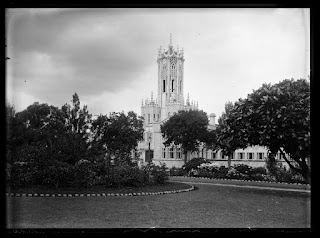
University of Auckland: Clock Tower and Old Choral Hall

Image
While exploring Heritage Images online I decided to search images of the University of Auckland out of interest as I’ve studying there for the past five years. The images are very interesting and give a gauge as to how the university has changed over the years. Ref: Henry Winkelmann, Looking across Princes Street from the Albert Park grounds..., February 1927, Sir George Grey Special Collections, Auckland Libraries, 1-W791.

Di Stewart photograph collection

Image
Auckland Libraries’ photograph collections contain over five hundred thousand images and are continually growing. Today we are spotlighting a 2013 accession of photographs taken by Di Stewart which have recently been digitised and made available online through our Heritage Images database. Ref: Di Stewart, Carnegie Library, Thames, 1990s?, Sir George Grey Special Collections, Auckland Libraries, 1200-37. Ref: Di Stewart, Queen of Beauty Mine pump quadrants, Thames, 1990s?, Sir George Grey Special Collections, Auckland Libraries, 1200-22.

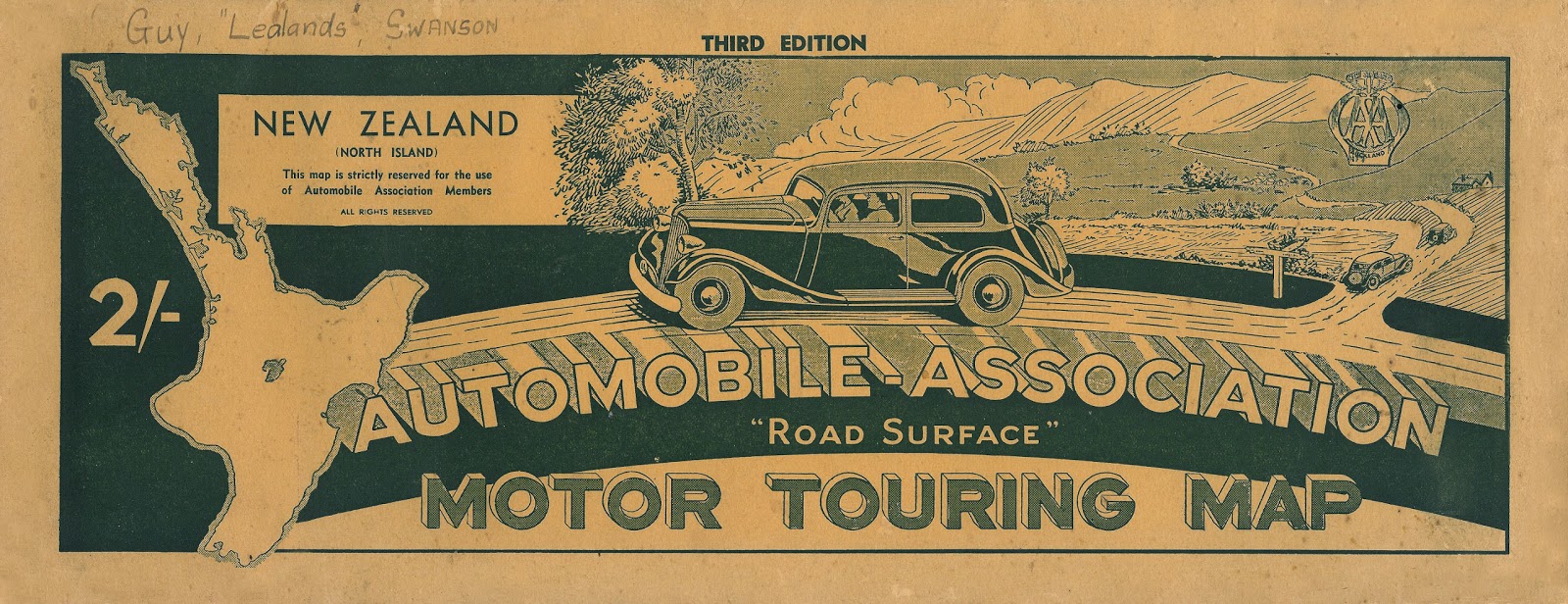
Automobile Association maps

Image
Sir George Grey Special Collections holds a number of road, street and tramping track maps produced by the Automobile Association (AA). Ref: Automobile Association 'road surface' motor touring map..., 1930s, NZ map 372, Sir George Grey Special Collections, Auckland Libraries.  The following information is from John McCrystal's book 'One hundred years of motoring in New Zealand'  which provides a great introduction to the history of the organisation. The AA was founded in 1903 and began as an automobile club for motoring enthusiasts. One of the earliest functions of the associations was signposting. In 1915, members of the Auckland branch of the AA began voluntarily marking routes. In 1925, Roy Champtaloup drew the first official AA road map by hand. Soon afterwards map making became more sophisticated, and for a time, both the Auckland and Wellington associations had their own cartographic departments. The oldest AA map in Sir George Grey Special Collect...

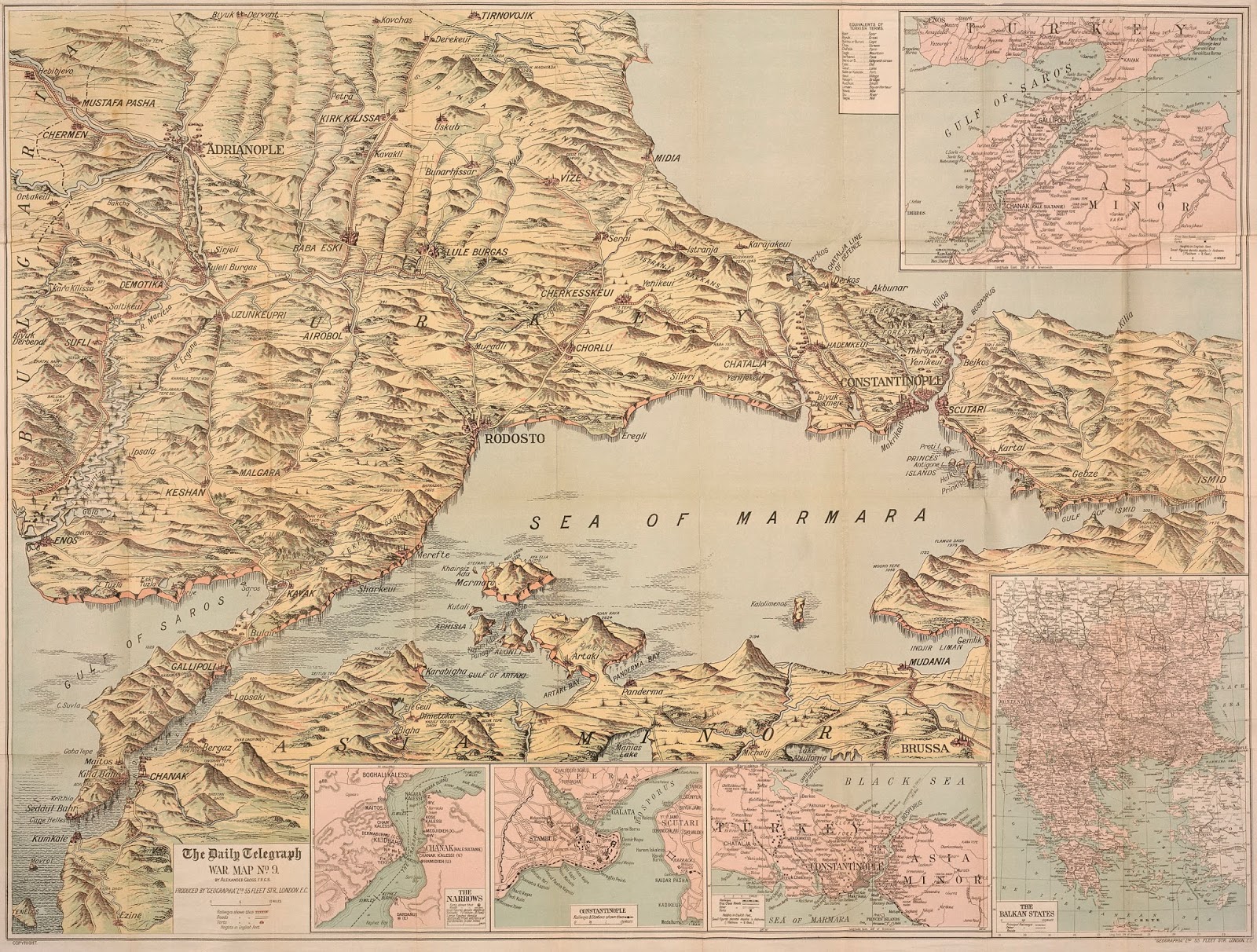
Maps of Gallipoli

Image
Sir George Grey Special Collections hold a number of First World War maps of Gallipoli and surrounding regions. Seven of these maps have been digitised and are accessible via the Heritage Images database. In April 1915, New Zealand soldiers, alongside those from Australia, Britain and France, invaded the Gallipoli Peninsula. This was to ensure an Allied naval force could break through the Dardanelles Strait and seize or threaten the Ottoman capital of Constantinople, and hopefully the Ottoman Empire might be forced out of the war. The British landed at Cape Helles on the southern tip of the peninsula, while the Australian and New Zealand Army Corps (ANZACs) landed half way up the peninsula, in order to cut off the Ottomans’ supply route to the south. Neither force managed to achieve their primary objectives and the conflict soon turned into a stalemate of trench warfare. Ref:  The Daily Telegraph picture map of the Dardanelles... , 1915, Sir George Grey Special C...

An inside view of Freemasonry from Auckland’s United Masters Lodge No. 167

Image
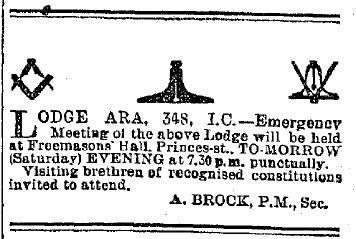
The history of freemasonry in New Zealand goes back to the 1830’s and includes members such as Sir George Grey , former Prime Minister William Ferguson Massey , Sir Peter Buck and Sir Mason Durie . Now 100 years of local and international Masonic history is available to view on a CD-ROM containing Auckland’s United Masters Lodge No. 167 Transactions periodical, 1909-2009, revealing a detailed picture of Freemasons’ ethics, ceremonies and symbols. Several items document early Freemasons activities in Auckland including the first recorded meeting at which members were present - the laying of the foundation stone of St Paul’s Anglican Church, then in Emily Place, in 1841. Ref: Excerpt from Auckland Star, Volume XXVI, Issue 231, 27 September 1895, p.5. The first Lodge in Auckland to build its own meeting place, Ara Lodge, held their meetings in the Exchange Motel, Shortland Street, before moving in February 1844 to the Royal Hotel, where the Northern Club now stands. In 1...

Auckland's Town Hall

Image
The Heritage Images database has a marvelous feature called ‘Through the decades’ that shows how a building and its surroundings change over time. Some of the significant places featured include Albert Park, the Ferry Building and in its prominent Queen Street location, the Auckland Town Hall -- a building of cultural significance noted for its unusual shape. It has been described as “a wedge of cheese or a decrepit flat iron.” The dozen photographs in the 'Through the decades' section document significant aspects of the Hall's history from its construction in 1910, to the creation of Aotea Square in the 1970s. Ref: Hubert Vaile, The Auckland Town Hall under construction, 1910, Sir George Grey Special Collections, Auckland Libraries, 2-V1409 Ref: Henry Winkelmann, Auckland Town Hall from the corner of Wakefield Street, with the Grey statue, 28 January 1921, Sir George Grey Special Collections, Auckland Libraries, 1-W1746

Point Chevalier's Liverpool Estate

Image
A few months back we took a look at the Victory Estate in Mt Roskill, an area named in commemoration of First World War military men. A few years earlier, just across the way in Point Chevalier, there was an equally interesting parcel of lots known as the Liverpool Estate. This piece of land is bordered at one end by Great North and Point Chevalier Roads. Besides housing, it now contains a supermarket, assorted shops and the Point Chevalier Community Library. Ref: A map of allotments for sale in Point Chevalier, about 1915, Sir George Grey Special Collections, Auckland Libraries, NZ Map 1298 The estate was created in 1913 by a group known as the Liverpool Estate Syndicate and was marketed as a “last opportunity” to acquire main road frontage close to the city. It was only a fifteen minute walk to the Arch Hill terminus and a significant selling point was that a motorbus passed by. The Point Chevalier Motor Bus Company ran from 1915-1920 and was owned by prominent locals, in...

Ron Clark's colour slides

Image
Sir George Grey Special Collections recently acquired a wonderful collection of colour slides taken by Ron Clark mostly in the nineteen-fifties, sixties and seventies. They are accessible via the  Heritage Images  database. Ref: Ron Clark, Oakura Bay,  1950s, Sir George Grey Special Collections, Auckland Libraries, 1207-1227 Ref: Ron Clark,  Muriel Clark at the wheel of a Humber Hawk ,  about 1956, Sir George Grey Special Collections, Auckland Libraries, 1207-12 Photographs from the late nineteenth and early twentieth centuries are a strong part of the Sir George Grey Special Collections image collection. The Ron Clark slides span the mid-twentieth century, filling a time period gap in Auckland Libraries' photograph collections. Life in New Zealand is captured in wide-ranging ways. There are scenes showing urban and rural activities, family gatherings and outings, interior shots of homes, churches and hospital wards, beach visits, overseas holi...

Radcliffe's scenes

Image
Sir George Grey Special Collections has a large collection of glass plate negatives of scenic views of New Zealand taken by Frederick George Radcliffe . Ref: F G Radcliffe, Lake Kaniere, Sir George Grey Special Collections, Auckland Libraries, 35-R644 Radcliffe came to New Zealand from England in the early 1890s. Soon afterwards his wife, Kate, and their two daughters, Harriette and Olive, joined him at his farm 'Utopia' near Paparoa, on an inlet of the Kaipara Harbour. Radcliffe's interest in photography grew and he quickly acquired a reputation as an exceptional scenic photographer. For twenty years he traveled the country taking photographs of small rural towns, large cities, rivers, gardens, buildings, beaches, wharves, forests, lakes and streets. From 1909, with the help of Kate and Olive, he operated a successful postcard business from his home in Whangarei. Radcliffe played the oboe, conducted local orchestras and was an active member of various music-relat...

Raising the Baa

Image
Sheep, the cornerstone of the agricultural industry in New Zealand since the 1850s and a very important part of the economy. Sheep have shaped the farming environment throughout the country and spawned many a joke. Where would we be without New Zealand lamb and merino clothing? When refrigeration on ships became available in 1882, meat was able to be shipped around the world, including to Britain, and the industry flourished. The population peaked in 1982 at 70 million but has steadily reduced over the years as other industries have come to the fore such as dairy farming and the timber industry. With around 40 million sheep, that is still a whopping 10 sheep per person. Over half the sheep in New Zealand are Romney, which is an English breed used for both meat and wool. What to find out more?  Te Ara has a great section on sheep farming and its importance . Now you are all set to wander through the sheep of yesteryear, drawn from the heritage collections at Auckland Librar...

Views of the Pacific

Image
Pasifika at Auckland Libraries is well underway and there is lots you can take part in . To get you in the mood, listen to the Pacific Islands music playlist  that has been specially created for this festival. You can also check out the  Pacific resources  at Auckland Libraries. This includes a range of heritage collections: online resources, Pacific Island family history resources (Central Auckland Research Centre), Pacific newspapers (South Auckland Research Centre) and reference materials at the research centres . There are also significant collections in the Sir George Grey Special Collections, including a tapa cloth book collected during Cooks' three voyages to the southern hemisphere. This has now been digitised and can be accessed online and you can read about the project to track down the other Cook tapa cloth books known to exist. To further celebrate and honour the contribution that Pacific Islands communities make to the cultural mix of peoples...

Upper Greys Avenue flats

Image
The Housing NZ flats at 115-139 Grey Avenue (known as the Upper Greys Ave flats) are going to undergo a much needed makeover. The land behind the flats, which is currently being used as a car park, will  be sold off. The other state housing flats nearby at 95-113 Grey Ave (known as the Lower Greys Ave Flats) were upgraded 5 years ago and will also remain in state hands.   Ref: Greys Ave showing the two Housing NZ flats, Auckland Council GIS Viewer, March 2014 Prior to the building of both of these blocks of flats, the area around Greys Avenue or Grey Street as it was known them, was home to a Chinese community. It was regarded by some (including the government) as a ‘slum' and  in 1941, the Labour government, with financial backing from the council, started to clear the area, which  made way for the building of both sets of flats. Ref: 580-2234, architectural model of the multi-storey state flats in Greys Ave 1956-1957, Sir George Grey Special Collections ...

Auckland Zoo

Image
The first public zoo in NZ was opened by the Wellington City Council in 1906, near Newtown Park. The initial occupant was a solitary lion but by the mid 1920s, the zoo housed over 600 animals. The inaugral zoo in Auckland was opened by a local council again and was located at Western Springs in 1922. The animals came from John Boyd's private zoos around the country, which had recently closed down at the time. Ref: 35-R1804, entrance to Wellington Zoo. Tourist Series 2354, no date, Sir George Grey Special Collections Compared with today's standards, conditions in both zoos were pretty awful. Auckland Zoo was prone to flooding and had exceedingly tenacious rats who quickly returned whenever they were evicted - not surprisingly, since the zoo was opposite the city dump! Ref: 1-W655, looking NW from the grounds of Auckland Zoo towards Point Chevalier, 1925, Sir George Grey Special Collections Take a virtual tour around Auckland zoo through the heritage collections at Au...

Reading photographs

Image
The latest blog post from Walter Cook at the advent of his retirement from The National Library of New Zealand Te Puna Mātauranga O Aotearoa is a fascinating read. He divulges the 'tricks of the trade' used to date photographs. I was so interested in this idea, that I decided to test out his 'taxonomy of fashion', which is based on women's fashion and hairstyle trends of the day. I used these dated headings as a framework to search for complementary photos in the Sir George Grey Special Collections, using the Auckland Libraries Heritage Images database. You can see from what I found below, that it was quite a success! In a few cases where we don't know the exact date the photograph was taken, the taxonomy can be used as another tool in helping us to pin this down the date to a narrower time period. So enjoy and thanks to the National Library for the inspiration and what turned out to be a very fun exercise! The full crinoline, 1856 to 1865. Characterised...

Hydrographic heritage

Image
During the Auckland Tall Ships Festival  earlier this year the Auckland Libraries heritage and research collections  organised a popular display which included letters, maps, magazine covers and photographs. Of particular interest to many visitors were the hydrographic charts. These charts are fascinating examples of early mapping and are wonderfully detailed, with volcanic cones sometimes looking like puffs of smoke. They are accessible via the  Heritage Images  database and copies of the charts are available to be purchased from Sir George Grey Special Collections . Ref: NZ Map 3908a, Auckland Harbour, 1848-1855, Sir George Grey Special Collections Ref: NZ Map 2560, Kaipara Harbour, 1852, Sir George Grey Special Collections In 1848,  C aptain John Lort Stokes   commanded the paddle-steamer  Acheron, and began the first official hydrographic survey of the New Zealand coastline. Starting on Auckland's North Shore,...

Meola Creek

Image
Meola Creek is called Waititiko by local Maori, meaning 'water of the periwinkles'. It was subsequently named Meola Creek by settler Allan Taylor, possibly after Meola Glacier (or Athasi-Balati Glacier) near where he was born in Seringapatam, India, in 1832. Ref: 580-A5338, aerial view ooking north east over Western Springs towards Point Chevalier showing Western Springs Road (left to centre foreground) with Meola Rd (left to right distance) Meola Creek (left of centre distance) and Motions Creek (centre distance), 1965, Sir George Grey Special Collections Allan Taylor (1832-1890) arrived in New Zealand aged 16 and soon after began buying land that would become the Alberton estate. In the 1890s he became known as Allan Kerr Taylor . Ref: 856-9319, two people taking out a dinghy possibly at Meola Creek, c. 1890s, Sir George Grey Special Collections

The Womens Suffragette movement in NZ and Britain

Image
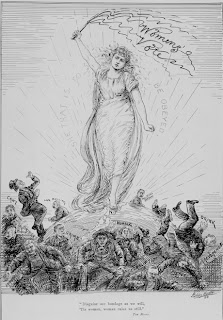
The 19th September marks Suffrage Day in NZ . This year's anniversary is extra special, since it marks 120 years since Kiwi women won the right to vote in national parliamentary elections in 1893. The Governor, Lord Glasgow, signed the landmark legislation, which made the new Electoral Act into law. In doing so, NZ became the first self governing country in the world to give women this right. Ref: 7-A12543, A cartoon by Ashley Hunter on Women's Vote, 30 Sept 1893, Sir George Grey Special Collections Also of importance during 1893, was the election of the first female mayor in the British Empire. Elizabeth Yates became the Mayor of Onehunga Borough Council in 1893 and served until 1894. She also was a councilor from 1899 - 1901. Despite the sexism Elizabeth endured her time as mayor, she made a huge impact - reduced the debt of the council, kept the streets and footpaths maintained and made an impression on Parliament when lobbying for the Onehunga Cemetery Bill. Ref...

Tongan Language Week

Image
Malo e lelei. Tongan Language Week is being celebrated from 1-8 September. The theme this year is Fakakoloa 'o Aotearoa 'aki 'etau Lea mo e Hiva Faka-tonga / Enriching Aotearoa with Tongan Language and Music. As part of the celebrations, there is a vibrant  Facebook page . Auckland Libraries has a number of heritage resources relating to Tonga. This include the following subjects: heritage and identity, the Birth Marriages Death index for Fiji and Tonga from 1858-1873, traditional medical practices, early photography in Tonga and Samoa from 1855-1900, Tongan art, early Tonga as the explorers saw it 1616-1810 and the biography of the King of Tonga. Also held in the heritage collections are images showing Tonga, so step back in time and take a walk down memory lane ... Royalty:  Ref: AWNS-19000831-5-6, Mafu Prince of Tonga, 1900, Sir George Grey Special Collections

Out of the Box and the New Zealand Shipping Co

Image
On 2nd September 2013, the first of a series of small exhibitions will open at the Bill Laxon Maritime Library at Voyager New Zealand Maritime Museum. The exhibition will remain in place for 1 or 2 months in a case  installed in the Edmiston Gallery . The 'Out of the Box' exhibition series will showcase some of the paper objects (e.g. books, archives, manuscripts original documents and photographs) that are normally kept in boxes in storage and are only seen when needed for research enquiries or for temporary exhibitions. Ref: 4-960, Looking south from the harbour over the Auckland waterfront showing the premises of the New Zealand Shipping Company Limited, 1892, Sir George Grey Special Collections In keeping with the theme this month - Merchant Navy Day (commemorated on 3rd September to honour those who served during WW2), the first exhibition will celebrate the140th Anniversary of the New Zealand Shipping Company . Ref: 1-W1090, Looking south towards Queen St show...