Posts

Showing posts with the label churches

Presbyterianism on the peninsula

Image
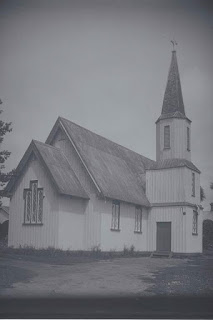
On the last Sunday in September the Awhitu Central Church will celebrate its 140th anniversary. Travellers who pass through Awhitu Central on their way to the Manukau Heads lighthouse will be familiar with this iconic building.   Ref: Bruce Ringer, Awhitu Central Church, 20 August 2017.     The Awhitu Central Church was opened as the Awhitu Presbyterian Church on 23 September 1877 (in accordance with the wishes of the donor of the land, George Garland, it also accommodated both Anglican and Methodist congregations). It is today the last active church of four Presbyterian churches which were opened on the Manukau Peninsula during the 19th century, although two other equally picturesque buildings survive. When the Awhitu church opened there were already two Presbyterian churches in the nearby Pollok settlement. One had been opened by members of the Scotch Presbyterian Church on 22 May 1870, the other by members of the Church of Scotland on 14 June 1870. The fo...

Churches in Onehunga

Image
There are several historic churches in Onehunga, reflecting the early European settlement of the area. Early Church Services in Onehunga The first church services in Onehunga were held on the first Sunday (21 November 1847) after the arrival of the first contingent of the Fencibles . There was an Anglican service in the morning and a Catholic service in the afternoon. St Peter’s Anglican Church St Peter’s Church was one of the earliest churches in Auckland, constructed in 1848. The first service was held on Saint Peter’s Day, 29 June 1848.The stone wall at the church was built in 1853, a part of which still stands. In 1857, the tower and the spire were moved to the south side of the church. As the numbers of people attending the church grew, the original wooden church was extended in the 1860s and 1870s. Ref: St Peters Church, Onehunga, 1860s, Sir George Grey Special Collections, Auckland Libraries, 957-192-1.

The little church that wouldn’t die

Image
Later this year The church on the corner: a history of Selwyn Church Māngere East, 1863-2012 will be published. Selwyn Church started life 153 years ago in Ōtāhuhu when local Anglicans built a new wooden church in Victoria Street (now Mason Avenue). It was dedicated as the Church of the Holy, Blessed and Undivided Trinity on St John the Evangelist’s Day, 27 December 1863 by Bishops George Augustus Selwyn and John Coleridge Patteson . Ref: James D Richardson, Old Holy Trinity Church, Ōtāhuhu, c 1900-1919, Sir George Grey Special Collections, Auckland Libraries, 4-8789.

Milan Mrkusich’s public art

Image
One of New Zealand’s most highly respected abstract artists, Milan Mrkusich , designed several large public artworks in Auckland in the 1950s-1960s. The most well-known existing ones include the mosaic mural on the B. J. Ball Building overlooking Fanshawe Street, and the stained glass windows at Grey Lynn’s St Joseph’s Catholic Church - the largest abstract work in the country at that time. Ref: Patrick Clearwater, BJ Ball mural, 31 May 2010. B. J. Ball (NZ) Ltd was a paper manufacturing company and Mrkusich’s mural for them highlights the paper-making process from the raw material of trees to the end product of stacks of reams. This mural is 7.6m high and 3.9m wide (25ft x13 ft.) and is made from thousands of glass and ceramic tiles. As Julian Dashper recounts in a 1995 article, Mrkusich made full size plan drawings “which he rolled up and posted to Italy, where a master tile maker made a complete mural on the floor, turned it upside down into hundreds of little boxes and ...

Pasifika Churches in South Auckland

Image
The church forms an important part of the life of many Pasifika communities. Over recent decades the streetscapes in many parts of South Auckland have been enhanced by the addition of large new churches serving Pacific Island congregations. Some of these churches make striking architectural statements. For instance, in the Ormiston Road Tongan Methodist Church, architect George Moala used both traditional Tongan forms and traditional materials such as coconut fibre. Expert Tongan craftsmen were brought in to help with the work. The church was opened in June 1990. Ref: Footprints 03324, interior, Tongan Methodist Church, Otara, 1990, photograph reproduced by permission of Fairfax Media, South Auckland Research Centre Almost all of the mainstream and many of the smaller denominations are represented by thriving Pacific Island congregations. Some South Auckland churches hold their Sunday services in 3 or 4 different languages. Ref: Footprints 03313, New home for church, Otara,...