Posts

Showing posts with the label religion

Lilian Edger and Theosophy

Image
Last year in the Special Collections reading room I came across a slim volume titled Religion and theosophy, a lecture delivered on Sunday afternoon in the City Hall, Auckland, New Zealand on Sunday afternoon, March 26th, 1893 by Lilian Edger, M.A. Intrigued by the title I wondered about who the woman was who had given this lecture. After a little digging I found Lilian Edger was a scholar, lecturer, author, educator and prominent Theosophist. More well-known is her older sister Kate who was the first woman in New Zealand to gain a university degree. Lilian was also an outstanding scholar, obtaining her B.A. at 18 and her M.A. with double first-class honours a year later from Canterbury College. Ref: Theosophy in New Zealand, New Series v.7:no.2, April-June 1946, page 47, Auckland Libraries, SERIAL 212 T39.

Churches in Onehunga

Image
There are several historic churches in Onehunga, reflecting the early European settlement of the area. Early Church Services in Onehunga The first church services in Onehunga were held on the first Sunday (21 November 1847) after the arrival of the first contingent of the Fencibles . There was an Anglican service in the morning and a Catholic service in the afternoon. St Peter’s Anglican Church St Peter’s Church was one of the earliest churches in Auckland, constructed in 1848. The first service was held on Saint Peter’s Day, 29 June 1848.The stone wall at the church was built in 1853, a part of which still stands. In 1857, the tower and the spire were moved to the south side of the church. As the numbers of people attending the church grew, the original wooden church was extended in the 1860s and 1870s. Ref: St Peters Church, Onehunga, 1860s, Sir George Grey Special Collections, Auckland Libraries, 957-192-1.

The little church that wouldn’t die

Image
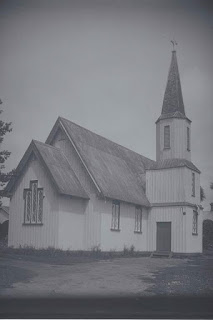
Later this year The church on the corner: a history of Selwyn Church Māngere East, 1863-2012 will be published. Selwyn Church started life 153 years ago in Ōtāhuhu when local Anglicans built a new wooden church in Victoria Street (now Mason Avenue). It was dedicated as the Church of the Holy, Blessed and Undivided Trinity on St John the Evangelist’s Day, 27 December 1863 by Bishops George Augustus Selwyn and John Coleridge Patteson . Ref: James D Richardson, Old Holy Trinity Church, Ōtāhuhu, c 1900-1919, Sir George Grey Special Collections, Auckland Libraries, 4-8789.

Bernard & Picart's Ceremonies: the book that changed Europe

Image
The ceremonies and religious customs of the various nations of the known world was the first book to compare the world’s religions in a way that encouraged tolerance and has recently been called ' The book that changed Europe'. Listen to Sue Berman and Andrew Henry discuss the book on our Real Gold podcast . The ceremonies and religious customs was illustrated by Bernard Picart and written and published in Amsterdam by Jean Frederic Bernard between 1723 and 1737. Better known as Picart’s Ceremonies it is a beautifully illustrated seven volume work with over 260 plates of engravings by Picart who was one of the most famous engravers and book-illustrators of the time. Much of the text that accompanies these images was written by Jean Frederic Bernard, a successful book publisher, although his name never appeared on any of the editions. What made this such a revolutionary work was that Bernard & Picart try to present as positive a version of other beliefs to th...

Incunabula

Image
The item in the image below belongs to a group of books collectively referred to as  incunabula  -- items which were printed (not handwritten) before the year 1501 in Europe. There are 106 incunabula in Sir George Grey Special Collections . Ref: Saint Birgitta. Revelationes . Nuremberg: Printed by Anton Koberger, 1500. Sir George Grey  Special Collections. Revelationes  was printed in 1500 in Nuremberg. Auckland Libraries'  copy  was a donation from Sir George Grey . Iain Sharp in Real Gold describes  Revelationes  as 'a blend of theological meditation, biblical lore and spiritual autobiography'.  Revelationes  was dictated to the confessors of Saint Birgitta, a Swedish mystic, over a period of twenty years. It is generally accepted that  Al brecht  Dürer  designed the woodcuts, even if someone else did the physical cutting of the blocks.

Easter

Image
Although Easter still has religious significance for many people, for others it is an opportunity to have a holiday and enjoy the last few rays of  the Kiwi autumn before the long winter months set in. Events such as race meetings, day trips, tramps, horticultural shows and sports tournaments are often held over the Easter period. And of course there is the obligatory hot cross buns and Easter egg eating! You can use the  Ephemera Index to search for heritage related resources at Auckland Libraries such as information about Easter shows and Easter cards. The Manuscripts Online database has letters and other unpublished material relating to Easter. This includes a letter from Bishop Selwyn to Sir George Grey in 1883, in which he discusses grass seeds and advises Grey that he will be in Auckland over Easter (GLNZ S17.2). Simply enter Easter into the keyword search box of both databases and have a browse. In the meantime, here is a selection for you to flick through in...