Posts

The picture books of Robyn Kahukiwa

Image
Central Auckland Research Centre is currently displaying work by award-winning picture book writer and illustrator Robyn Kahukiwa. Ref: Robyn Kahukiwa display in the Central Auckland Research Centre, February 2014 Kahukiwa illustrated her first children’s book in 1981 - 'The Kuia and the Spider: Te Kuia Me Te Pungawerewere', a collaborative project with writer Patricia Grace, which won the Children’s Picture Book of the Year. She also worked with Joy Cowley on 'Grandma’s stick' and 'Hatupatu and the birdwoman' before writing her own picture books, often drawing on Māori myths and legends which she also includes in contemporary settings. Ref: Robyn Kahukiwa display in the Central Auckland Research Centre, February 2014

It's time to accessorise!

Image
It is said that accessories make an outfit, well that is just as true for men as it is for a woman. Have a wander through the accessories that people used to wear in the photos below, drawn from the heritage collections at Auckland Libraries. Some things like bow ties and belts don't look much different from today but you don't see many people wearing bows that large in their hair, as sported by the ladies and children in the first decade of the 20th century! Bow ties: Ref: 601-192B, the Masters McLauchlin, c. 1924, Sir George Grey Special Collections Ref: 31-66350, the Lyric Quartette, 1911, Sir George Grey Special Collections Ref: 31-66166, McDougal group, 1911, Sir George Grey Special Collections

Piha Radar Station

Image
Ref: JTD-04A-01111, Piha Number 4 Radar Station antenna, 1958, West Auckland Research Centre The Piha Radar Station was constructed during WW2 by the NZ Air Force. Located at the end of Log Race Road in the Waitakere Ranges Regional Park, it was part of a network of radar stations along New Zealand's coast. The purpose of this site was to use radio wave transmission aerials and receiving equipment to detect any signs of attack from enemy aircrafts or vessels. Ref: JTD-04J-01110, Te Ahuahu Road and radar station, 1958, West Auckland Research Centre The site was closed permanently in the 1950s and the buildings and other structures removed. However, there are remains that can still be seen, including the concrete pads where the aerial tower once stood. Ref: JTD-04A-00307-1, remains at radar station site and Hikurangi beacon, 1963, West Auckland Research Centre This site has been added to the schedule of significant historic heritage places in the Proposed Auckland Uni...

Auckland Zoo

Image
The first public zoo in NZ was opened by the Wellington City Council in 1906, near Newtown Park. The initial occupant was a solitary lion but by the mid 1920s, the zoo housed over 600 animals. The inaugral zoo in Auckland was opened by a local council again and was located at Western Springs in 1922. The animals came from John Boyd's private zoos around the country, which had recently closed down at the time. Ref: 35-R1804, entrance to Wellington Zoo. Tourist Series 2354, no date, Sir George Grey Special Collections Compared with today's standards, conditions in both zoos were pretty awful. Auckland Zoo was prone to flooding and had exceedingly tenacious rats who quickly returned whenever they were evicted - not surprisingly, since the zoo was opposite the city dump! Ref: 1-W655, looking NW from the grounds of Auckland Zoo towards Point Chevalier, 1925, Sir George Grey Special Collections Take a virtual tour around Auckland zoo through the heritage collections at Au...

Piha Mill

Image
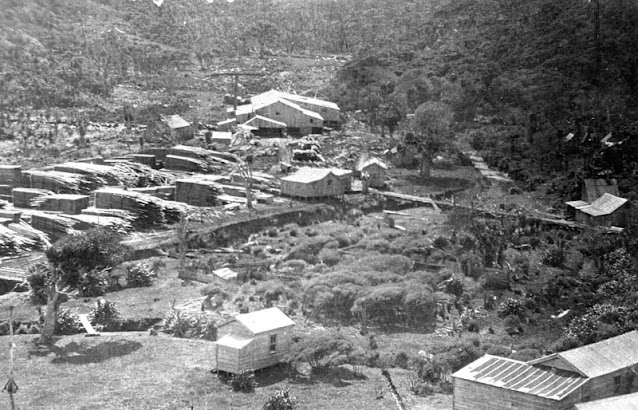
Piha Mill was operational from 1910 until 1921 and was one of the largest mills in the region before the timber industry began to decline.Although the mill was situated within the boundaries of the Waitakere Ranges Regional Park, a village grew up around it to accommodate the workers. Facilities such as mill accommodation, cookhouse, store and a school were also established. Ref: JTD-04L-02640-1, Piha Mill, 1915, West Auckland Research Centre Kauri trees were felled and transported to the mill using a combination of bullock teams, driving dams and timber chutes. After the wood had been cut, it was laboriously moved from Karekare by tramway, driven to Windy Beach by wagon and then taken by coastal tramway to Whatipu Wharf before finally being shipped out. Ironically timber from the mill was for the most part used to build railways. Ref: JTD-04C-03803, horse and truck of timber from Piha Mill, 1920, West Auckland Research Centre

The weird & wonderful

Image
From the heritage collections at Auckland Libraries, here is a visual tour through the weird and wonderful.You never know what you might find ... from strange fancy dress choices and the splendour of the natural world to animals with abnormalities and miniature furniture. Its a virtual cabinet of curiosity! People: Ref: AWNS-19140507-44-1, a radiograph of a child who had swallowed a toy bicycle, Sir George Grey Special Collections Ref: 1054-UN124, group in very strange fancy dress, 1910-1991, Sir George Grey Special Collections Ref: 4 -RIC117, Employees of W H Fenton and Company, hat manufacturer, in bizarre fancy dress and caricature hats advertising a sale, 1889 Sir George Grey Special Collections Ref: 31-58438, Mr Wilson dressed in a bear costume holding a bottle of wine & a biscuit, 1909, Sir George Grey Special Collections

Valentines Day

Image
Love is in the air ... and Valentine's Day is upon us. To get you in the mood, here is a selection of love themed images from the heritage collections at Auckland Libraries. Poetry: Ref: 7-C1916, William Morris, 'Love is enough', 1898, Sir George Grey Special Collections Love letters: Ref: AWNS-19080430-4-5, the love letter, 1908, Sir George Grey Special Collections