Posts

Showing posts with the label archives

Autograph books

Image
While the autograph is now thought of as a hastily scrawled celebrity signature, autograph books were once a treasured item which collected illustrations, poems and personal messages from friends and loved ones. Sir George Grey Special Collections is home to a number of these cherished albums. These books contain amazing images and messages that provide an insight into friendship groups and communities. Ref: Autograph album, 1911-1935, Sir George Grey Special Collections, Auckland Libraries, NZMS 1104.

RainbowYOUTH archive

Image
From humble but enthusiastic beginnings, RainbowYOUTH has grown to become one of the most successful youth organisations in New Zealand. Ref: RainbowYOUTH, RainbowYOUTH Collection, West Auckland Research Centre, Auckland Libraries. In 2017 an exhibition was created from the Auckland Libraries RainbowYOUTH archive collection, which consists of seven recorded oral histories , images and ephemera sharing the origin and development of the 28 year young organisation , and the stories of those involved from the very first small Auckland gay and lesbian group to the highly successful present day queer youth community support network. The RainbowYOUTH Exhibition is on now at Leys Institute Library , Ponsonby, until June 3.

Manurewa Central and Finlayson Park Schools

Image
The South Auckland Research Centre has recently processed two collections, which provide an insight into the history of two local schools: Manurewa Central School and Finlayson Park School . Manurewa Central School opened as Manurewa School in 1906, after the Woodside School Building was shifted to its new site on the corner of Hill Road and Great South Road. The building was later demolished in 1972. You can read more about the move and opening in the 31 August 1906 entry on Manukau’s Journey – a Manukau timeline . Ref: Opening day, Manurewa School, 3 September 1906, photograph reproduced courtesy of Manurewa Historical Society, South Auckland Research Centre, Auckland Libraries, Footprints 01209.

Arsons, marches and petitions: the 1970s abortion debate in New Zealand

Image
Creating New Zealand’s abortion law Abortion was illegal in NZ until the 1970s unless required to save the mother’s life. Nevertheless, the procedure was widely practiced and often unsafe. In 1927 a Department of Health official estimated 10,000 abortions took place annually - with NZ having one of the world’s highest death rates from botched abortions. This prompted the government to set up a Committee of Inquiry in 1936. Instead of focusing on the high rate of maternal deaths, the Committee focused on the falling birth rate and recommended an increase in family allowances.  A 1939 British ruling influenced the interpretation of abortion law in NZ to include mental health as grounds for the procedure, but many doctors refused to perform abortions. Ref: Alan Brown, Abortion march, 28 July 1972, Broadsheet Collective Records, Sir George Grey Special Collections, Auckland Libraries, NZMS 596.

International Archives Day

Image
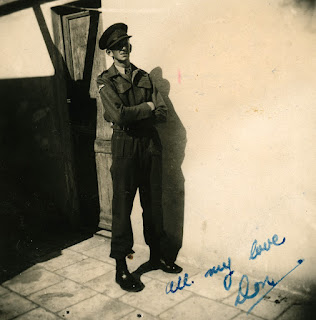
Did you know that June the 9 th is International Archives Day ? To celebrate, archive services from around the world were invited to submit an image from their collections and send a message to archival colleagues around the world. See if you can find all the contributions from New Zealand in the photo page , according to the NZ Records email list there are nine. Information about the gestation of International Archives Day and the reasoning behind it can be found at the International Council on Archives website . The hashtag #IAD15 was also really enjoyable to follow on Twitter throughout the day; happily Britain’s National Archives have collated them in Storify form . All of Auckland Libraries’ Research Centres hold archival collections, as does the Birkenhead Library which is home to the Chelsea Sugar Refinery’s archive . Through sheer coincidence the subject of both of Auckland Libraries’ contributions were the personal papers of decorated war heroes. Ref: Don ...

From the Archives of Selwyn Church, Mangere East

Image
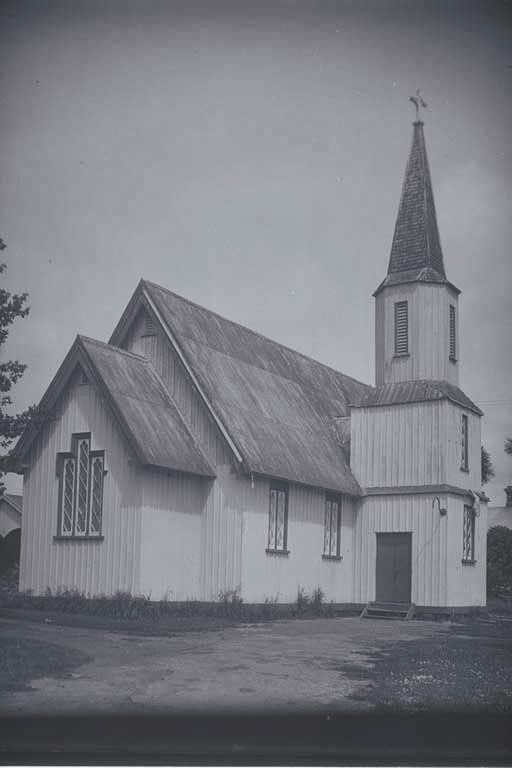
Selwyn Church began life as the second Holy Trinity Church in Victoria Avenue (now Mason Avenue) Otahuhu. The church was dedicated by Bishop Selwyn and Bishop Patteson on St John the Evangelist’s Day, 27 December 1863. Ref: 4-8789, Old Holy Trinity Church, Otahuhu, c. 1900-1919, Sir George Grey Special Collections The following poem was recently discovered among Selwyn Church’s archives. It was written by an anonymous, bored synodsman (a church member ) at the Christchurch synod in 1969, probably during a lengthy and tedious debate on the ordination of women.  Enjoy!

The rise and fall of the Mercury Theatre

Image
For a quarter of a century, the Mercury Theatre was the leading theatrical company in Auckland and one of the largest, most professionally run and most important performing arts organisations in the country (see an earlier post on 23 April 2013). A dozen or more shows were performed every year at this venue, ranging from children's pantomimes to cutting-edge drama. The Auckland Theatre Trust was formed in 1966 to raise funds for the establishment of a professional theatre company in Auckland. An old playhouse in France Street (off Karangahape Road), built in 1910 and later used as a cinema, was extensively refitted to serve as the company's headquarters and principal venue. The Mercury Theatre opened in 1968 with a production of J. M. Barrie's comedy, 'The admirable Crichton'. During the next few decades, the company attracted some of New Zealand's top acting talents (such as Roy Billing, Pam Ferris, Lee Grant, George Henare, Michael Hurst, Ian Mune and Jennif...

Broadsheet

Image
The Sir George Grey Special Collections at the Central City Library holds the archive of Broadsheet magazine as well as copies of  items such as the magazine, letters, posters , Broadsheet was a feminist magazine focusing on women's issues, publishedin New Zealand between 1973-1997. On display in the reading room cabinet at the moment, is a selection of photographs from the recently acquired photographic print archive of the magazine. The display includes images of protest events, notably by New Zealand women, and of the interior of an early incarnation of the Broadsheet bookshop. This bookshop eventually became 'The Women's Bookshop' which is now located on Ponsonby Road. Ref: NZMS596, Broadsheet bookshop badges, c. 1982/1983, Sir George Grey Special Collections

George Lowe

Image
On 22 March, New Zealander George Lowe passed away at the age of 89. George Lowe was the last surviving climber from the team that made the first successful ascent of Mount Everest. As a child, Lowe broke his arm and it did not heal well. Despite being told by doctors that he would always be a cripple, Lowe went on to become an highly accomplished mountaineer.  Lowe accompanied Sir Edmund Hillary on a several expeditions including on Eric Shipton’s British Everest Reconnaissance Expedition and John Hunt’s 1953 British Everest Expedition. Upon summitting Mount Everest with Nepalese sherpa Tenzing Norgay, Hillary told Lowe that they had "knocked the bastard off". Ref: AWNS-19350710-44-3, Young mountaineer, 1935, Sir George Grey Special Collections

International Tracing Service

Image
The International Commission for the International Tracing Service (ICITS)  is handing over management of the International Tracing Service in Bad Arolsen to the German Federal Archives (Bundesarchiv) after over 50 years. The ICITS will continue to give technical expertise, helping the ITS serve the victims of Nazi persecution and their families. Ref: T7129, North Auckland Research Centre The archives cover civilians detained in Nazi concentration or labour camps and people who had to flee their homes because of World War II. They house over 50 million card files relating to more than 17.5 million civilians persecuted by the Nazis.

Molasses, Alas, The Sideways Platypus

Image
Recently a customer was searching through old letterbooks in the Chelsea Archives at Birkenhead Library. Tissue thin pages, eye-watering  italic script, crumbling pages, circa 1889 – that sort of thing. He was hoping to find reference to his grandfather. Instead he found curious little notes. Which would be fine, except they seem to be nonsense: Ref: 'Platypus', Chelsea Archives, Birkenhead Library

When sugar was good for you ...

Image
 Ref: NZ 1965, Chelsea Archives, Birkenhead Library Once upon a time, sugar was good for you .... and Chelsea Archives at Birkenhead Library has the marketing-advertising-promo material to prove it!  Ref: NZ Sugar 1968, Chelsea Archives, Birkenhead Library It’s embedded in the many small publications contained in the archives - such as company newsletters, industry-related periodicals, series, centenary celebrations and that sort of thing. Today they might be considered corporate zines.  Ref: NZ Sugar 1969, Chelsea Archives, Birkenhead Library Examples include: 'Chelsea News', 'Sugar for New Zealand', 'New Zealand Sugar', 'CSR Newsletter', 'Australian Sugar', 'Sugar: Nature’s Bounty', 'Notes on Sugar in New Zealand' and the 'World'.  Ref: NZ Sugar 1970, Chelsea Archives, Birkenhead Library These publications contain splendours galore. Such as the many attempts to explain the triumph...

Chelsea Sugar Refinery and James K. Baxter, Cleaner

Image
When James K. Baxter was dismissed from his job at the Chelsea Sugar Refinery, it's well known that he wrote a rather 'unrefined' poem to express his disgruntlement: "I had the job of hosing down The hoick and sludge and grit For the sweet grains of sugar dust That had been lost in it. For all the sugar in the land Goes through that dismal dump And all the drains run through the works Into a filthy sump". Despite this unsugared description, a copy of 'The Ballad of the Stonegut Sugarworks' is lodged in the Chelsea Sugar Archives (at Birkenhead Library), sandwiched between a 1962 plan of the 'Disposition of Buildings' and a 1976 letter from the Refinery Manger to the Managing Director about managing absenteeism. A positioning which is at once random, and oddly relevant - though I couldn’t locate that impressive sounding ‘sump’ on the plan (see below).  Ref: 1962 Plan CSR-B94127, Chelsea Sugar Archives As to the letter, it reads as...

UNESCO Memory of the World

Image
Fancy going on a world tour of documentary heritage collections? Then read on ... The UNESCO Memory of the World project was launched ten years ago. It aims to recognise & create awareness, provide access and ultimately help contribute towards the preservation of culturally significant documentary heritage from around the world. Cultural institutions are encouraged to nominate material for the internationally recognised register . A look through the register reveals a wide array of items: illuminated manuscripts, archival records from significant companies, newspaper collections, photograph & film archives and even woodblocks. A wide range of languages, cultures, individuals, groups and events of significant social and cultural change are represented.

Big sugar in little Birkenhead – and the Chelsea Archives

Image
Photo credit: Melvin Vaniman c1902, Chelsea Archives It's big, it's orange , it's preposterous. You see it out of the corner of your eye as you drive up the Harbour Bridge, unless you're concentrating on the road of course.. It's the Chelsea Sugar Refinery in Birkenhead.